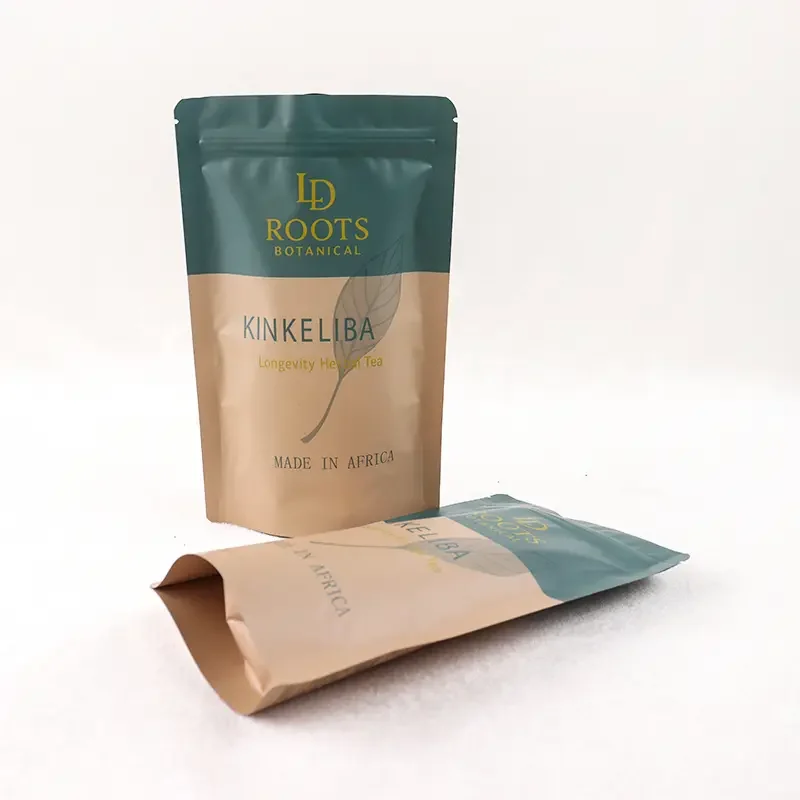
Stale chips, crushed pretzels and gummy bags that look half-empty on the shelf usually trace back to the bag, not the recipe. For custom snack packaging, start from two things: how fragile the snack is and how long it has to last. Light snacks that break easily, like chips or puffs, go in a nitrogen-flushed pillow bag. Dense snacks eaten over several days, like nuts, jerky, granola and gummies, go in a stand-up pouch with a zipper.
The barrier layer inside the film matters more than the bag shape. The oilier the snack and the longer the shelf life, the more barrier you pay for.
Which pouch style fits chips, nuts, jerky, granola and candy?
The right style for custom snack packaging depends on how dense the product is and how many sittings it takes to finish the pack. Pillow bags suit chips and pretzels. Stand-up zipper pouches suit nuts, jerky and gummies. Flat bottom pouches suit granola from about 450 g, and three side seal packs suit single portions.
A pillow bag is a flat bag with a centre back seal plus top and bottom seals, formed from roll stock film on a VFFS (vertical form-fill-seal) machine. A stand-up pouch is a bag with a folded bottom gusset that opens out so the bag stands on the shelf. A flat bottom pouch is a box-shaped bag with a flat base and two side gussets, and a three side seal pouch is a flat bag sealed on three sides, the cheap choice for 20–30 g portions. You’ll find all of them in our snack bag range.
Laminate codes in the table list layers from outside to inside. MOPP is matte oriented polypropylene (BOPP is its glossy form), CPP is cast polypropylene, a heat-sealable inner film, and nylon (NY) is a tough film that resists punctures from nut tips and jerky edges. An oxygen absorber is a small sachet of iron powder that soaks up oxygen left in a sealed bag.
| Snack | Main threat | Suggested pouch style | Typical laminate | Typical shelf life |
|---|---|---|---|---|
| Potato chips, puffs | Oxygen, light, crushing | Pillow bag | BOPP/VMCPP or PET/VMPET/PE | 3–6 months, nitrogen-flushed |
| Almonds, peanuts | Fat oxidation, sharp tips | Stand-up, zipper | PET/VMPET/PE or PET/NY/PE | 6–9 months, nitrogen-flushed |
| Jerky, meat snacks | Oxygen, mould | Stand-up, zipper, oxygen absorber | PET/VMPET/PE or PET/AL/PE | 6–9 months VMPET; up to about 12 months foil |
| Granola, cereal | Moisture, oil | Stand-up or flat bottom | PET/PE or MOPP/VMPET/PE | 2–3 months clear; 6–9 months metallised |
| Gummies, hard candy | Moisture gain or loss | Stand-up | PET/PE or PET/VMPET/PE | 6–9 months clear; 9–12 months metallised |
| Croutons, pretzels | Grease, moisture, breakage | Pillow bag or three side seal | MOPP/VMPET/PE | 6–9 months |
These ranges are typical for unopened bags at about 20–25 °C out of direct light, with nitrogen or an absorber where noted. Your recipe, oil content and seal quality move them, so confirm yours with a shelf-life test.
Chips can go in a stand-up zipper pouch, but they lose their protective air cushion and you pay for a zipper nobody uses. For pretzels and tortilla chips, size the bag close to the product plus nitrogen headspace so pieces can’t shift and snap in transit.

What barrier level does each snack need to stay crisp?
Crisp snacks need a barrier matched to their fat content and shelf-life target. For chips, nuts and jerky, metallised PET (VMPET) with nitrogen flushing or an oxygen absorber typically gives about 3–9 months in unopened bags at 20–25 °C out of direct light. Clear PET/PE typically covers granola for 2–3 months and gummies for 6–9 months.
OTR (oxygen transmission rate) is the amount of oxygen that passes through 1 m² of film per day, measured per ASTM D3985. WVTR (water vapour transmission rate) is the same measure for moisture, per ASTM F1249. Metallised PET (VMPET) is PET film with a thin vacuum-deposited aluminium coating; metallised CPP (VMCPP) applies the same coating to a heat-sealable film.
Typical OTR at 23 °C runs from the tens to around 100 cc/m²/day for clear PET/PE, about 1–3 cc/m²/day for PET/VMPET/PE, and close to zero for PET/AL/PE. Typical WVTR at 38 °C and 90% relative humidity is roughly 4–8 g/m²/day for clear PET/PE, about 0.5–1.5 g/m²/day for PET/VMPET/PE and close to zero for intact foil. Film thickness and metallisation quality shift all of these.
Fat decides the oxygen barrier, because oil goes rancid once oxygen gets in. Moisture turns a snack soft, so WVTR is the figure to compare for crackers, pretzels and granola; on clear PET/PE they typically stay crisp for weeks rather than months.
Does foil keep chips crisper than metallised film?
Not for a normal retail window. Aluminium foil costs more, and at the bag machine we see it develop crease cracks and pinholes wherever the bag is folded hard. Foil makes sense for jerky targeting about 12 months, heavily seasoned snacks and hot, humid export routes. Our guide to aluminium foil bags compares foil and VMPET in detail.

Can a kraft paper pouch keep nuts fresh?
A kraft paper pouch only keeps nuts fresh when the paper is laminated to a barrier layer, as in MOPP/Kraft/VMPET/PE. A kraft laminate is a pouch film with kraft paper outside and plastic barrier and sealant layers bonded inside. Unlined paper in most cases only works for roasted peanuts eaten within days; after that, nut oils turn rancid and grease soaks through.
The EU PPWR (Packaging and Packaging Waste Regulation) is pushing packaging toward recyclable structures, so recyclable mono-PE kraft-look pouches, built only from polyethylene layers, are worth testing now. Their barrier is lower than VMPET, so run a shelf-life test first and watch the implementing rules as they’re published.
Do snack bags need nitrogen flushing, a zipper or a tear notch?
A snack pouch needs nitrogen flushing when the product is fragile or oily and has to last months on a shelf. A zipper is only needed when one bag gets eaten over several sittings. A tear notch is worth adding to almost every heat-sealed snack bag, because it costs very little.
Nitrogen flushing means replacing the air in the bag with nitrogen just before sealing, which lowers residual oxygen and cushions fragile chips. It happens on the filling line, so no bag supplier can deliver bags “nitrogen flushed”, and nitrogen leaks out of a low-barrier bag within weeks.
How can a hand-filling brand get nitrogen flushing?
A hand-filling brand gets nitrogen flushing through a co-packer with a nitrogen-equipped filling line, or a tabletop gas-flush sealer fed from a nitrogen cylinder. For chips, a co-packer is usually the realistic route. Ask what residual oxygen they reach, how they measure it, and whether they want pouches or roll stock.
Tabletop sealers work for short runs of nuts, but residual oxygen varies bag to bag, so have a few filled bags checked with a headspace oxygen analyser. For hand-filled jerky and nuts, an oxygen absorber sized to the headspace is the simpler substitute, though it gives no cushion and won’t protect chips.
Resealable zippers earn their cost on nuts, jerky, granola and gummies from about 100 g up. Leave enough space between the zipper and the top seal: if the heat jaws can’t reach the seal area properly, the bag fails on our leak tester. A tear notch is a small cut in the side seal that starts a clean tear, so nobody attacks a tough nylon or foil laminate with scissors.

How do pouch size and fill weight relate for snacks?
Snack pouch size is set by product volume, so density decides the bag more than grams do. A 28 g bag of chips needs roughly the same film area as a 227 g bag of almonds. Chips also need headspace for nitrogen, and nuts need room above the fill so the zipper can close.
| Snack and fill | Format | Suggested starting size | Sizing note |
|---|---|---|---|
| Potato chips 28 g (1 oz) | Pillow bag | 127 x 203 mm | About half the volume is headspace |
| Potato chips 150 g (5.3 oz) | Pillow bag | 230 x 305 mm | Sized with nitrogen headspace |
| Beef jerky 85 g (3 oz) | Stand-up, zipper | 120 x 180 + 60 mm gusset | Bulky, uneven pieces |
| Gummy candy 150 g (5.3 oz) | Stand-up, zipper | 120 x 180 + 70 mm gusset | Sized for settled volume |
| Roasted almonds 227 g (8 oz) | Stand-up, zipper | 130 x 200 + 70 mm gusset | Bulk density about 0.6 g/ml |
| Granola 340 g (12 oz) | Stand-up | 160 x 250 + 90 mm gusset | Room for clusters |
In inches, in table order: 5 x 8, 9 x 12, 4.7 x 7.1 + 2.4, 4.7 x 7.1 + 2.8, 5.1 x 7.9 + 2.8 and 6.3 x 9.8 + 3.5 in gusset. Every bag is made to your product; we confirm the exact size against your fill weight, density and filling line, usually with a fill test on samples.
Jerky pieces change size from batch to batch, and gummies settle in transit, so a bag that looks full on the line can look slack-filled on the shelf. A simple fill test catches both:
- Fill three sample bags with product from different batches.
- Close the zipper or seal, then shake each bag for a minute to settle the fill.
- Check that the zipper still closes and the fill line sits where you want it on the front panel.
- Send us the result so we can adjust height or gusset before production.
Where first snack pouch orders go wrong
First snack pouch orders usually fail at the seal, not in the print. Most leaking or stale bags we see after launch come down to seasoning dust or oil in the seal area, a clear window on a fried snack, or a size picked from a photo.
Seasoning powder on the seal area causes channel leaks, which show up as bubble trails on the leak tester. The fix is a filling funnel that keeps powder below the seal, plus a thicker PE sealant that seals through light contamination.
Fill your samples with the real product, not rice or beans. Seal them, leave them overnight, then squeeze each one hard near the seal. Sharp almond tips and jerky edges find a weak PE layer within a day.
A large clear window on a fried snack lets in light, which speeds up rancidity, so keep it small or set it in a matte panel. On oily snacks such as croutons, a matte MOPP/VMPET/PE structure stops grease spotting the artwork.
What MOQ and printing options suit a new snack brand?
Digital printing usually suits a new snack brand, because it needs no plates or cylinders and digital minimums typically start around 1,000 pcs per design, so several flavours can launch at once. Rotogravure printing becomes cheaper per bag from about 10,000 pcs per design, once the one-time cylinder cost for each colour is spread across the run.
Digital printing prints straight from the artwork file. Rotogravure printing uses an engraved cylinder for each colour, so a 6-colour design needs 6 cylinders, paid once and again only for colours you change.
| Factor | Digital printing | Rotogravure printing |
|---|---|---|
| Typical minimum per design | 1,000 pcs | 10,000 pcs |
| Cylinder or plate cost | None | One-time cost per colour; repeated only for changed colours |
| Typical lead time | 7–15 days after artwork approval | 7–15 days after artwork approval |
| Colour and finishes | CMYK; spot colours approximated, fewer registered effects | CMYK + Pantone spot colours; registered spot matte, hot stamping |
| Best for | Launches, several flavours, test runs | Proven SKUs, lowest unit cost at volume |
Lead time is the same, so minimum and setup cost decide. We usually suggest moving a SKU to gravure once it has proven it sells, and keeping slow sellers on digital.
Matte and soft-touch suit nuts and granola, gloss makes chip colours pop, and spot varnish lifts the logo for little extra cost. For hot stamping and other effects, read our notes on printing and finish options for snack pouches.
How we handle snack pouches at YLTPACK
YLTPACK prints snack pouches digitally from 1,000 pcs per design and by gravure from 10,000 pcs, with water-based inks, in a 6,520 m² workshop running 30+ machines. Eco and recyclable materials start at 30,000 pcs, and roll stock film for VFFS lines starts at 100 kg. Lead time is 7–15 days after artwork approval.
Our in-house lab runs air-tightness and tensile tests, and every order passes an 11-point QC that covers seals, zipper and odour. Free samples from our stock (you pay freight) let you run the fill test first.
Snack pouch questions start-up brands ask
Start-up snack brands most often ask us about sealing equipment, recyclable mono-PE barrier, sharing one pouch size across flavours and food-contact testing for oily snacks. The short answers are below each question.
Can I seal snack pouches with a basic impulse sealer?
Yes, most snack laminates with a PE or CPP inner layer seal on a basic impulse sealer. Foil and thick nylon laminates need a longer dwell time or a band sealer, so test your settings on samples before launch.
Can recyclable mono-PE pouches hold nuts or chips?
In most cases, yes, for nuts and chips sold within a few months, depending on oil content and storage, but mono-PE does not replace metallised film one for one. Its barrier is lower than PET/VMPET/PE unless the structure includes a layer such as EVOH, so oily nuts go stale sooner. Run a shelf-life test before switching, and expect minimums around 30,000 pcs.
Can several flavours share one pouch size?
Yes, and it usually saves money. One size keeps your filling line set up the same way, and short digital runs let each flavour have its own design.
Are snack pouches safe for oily food contact?
Suitability for oily snacks is shown by food-contact declarations and migration testing with fatty food simulants, such as vegetable oil simulant D2 under EU 10/2011, or the relevant FDA 21 CFR provisions, including 21 CFR 177, for the US. We use FDA-compliant food-contact materials, with test reports available on request. The brand owner, usually with an accredited lab, confirms compliance for their own product, fill and storage conditions.
What to put in your quote request
A custom snack packaging quote is only as accurate as the brief behind it. With the snack, fill weight, filling method and quantity per design in hand, a supplier can suggest the right laminate and size on the first reply instead of after three rounds of emails.
- Product: snack type, fried or baked, oil content, any sharp pieces
- Fill and SKUs: grams per bag and number of designs
- Filling method: by hand, semi-automatic, VFFS, or a co-packer with nitrogen
- Quantity and market: pieces per design and target shelf life
- Features and finish: zipper, window, matte or gloss
Send us your brief and we’ll suggest a structure and quote within one business day. Free samples are available if you’d like to test first.
Reach us on WhatsApp at +86 182 1944 5665, by email at Feynman@yltpacking.com, or through our quote form.