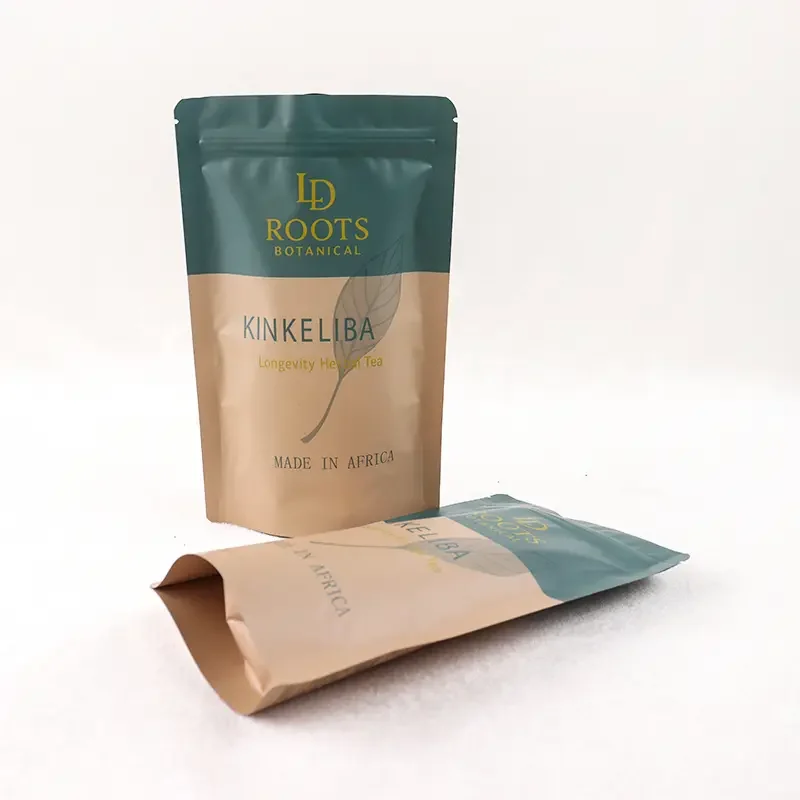
What Is Dietary Supplement Packaging and What Does It Have to Do?
Dietary supplement packaging is the primary and secondary packaging that keeps a capsule, tablet, gummy, or powder stable, correctly dosed, legally labeled, and recognizable on shelf until the last serving. Primary packaging touches the product directly. Secondary packaging, such as a folding carton or corrugated shipper, protects it in transit and adds label space.
Primary formats include bottles, jars, pouches, stick packs, and blisters. Whatever the format, the package has five jobs:
- Barrier protection: It blocks the moisture, oxygen, and light that degrade vitamins, probiotics, and fish oils.
- Tamper evidence: Induction seals, shrink bands, or breakaway caps show that nobody has opened the product.
- Dosing convenience: Counted fills, scoops, and single-serve sticks make the daily habit easy to keep.
- Compliant labeling: The package needs enough panel space for the Supplement Facts panel, warnings, and disclaimers.
- Shipping durability: It has to survive parcel networks, which matters more as online sales grow.
The volume is enormous. According to the Council for Responsible Nutrition (CRN) 2024 Consumer Survey on Dietary Supplements, 75% of US adults take dietary supplements. That works out to millions of bottles opened every morning, and each one has to hold up for months after the seal comes off.

Which Packaging Format Fits Your Supplement?
The right supplement packaging format depends on how the product fails. Rigid bottles suit most capsules and tablets, stand-up pouches suit powders and gummies, and blister packs or stick packs suit single doses or sensitive ingredients such as probiotics. Gummies absorb moisture, softgels react to light and heat, and probiotics lose viable counts every time a humid jar is opened.
The comparison below shows why bottles remain the default for capsules while pouches dominate powders.
| Format | Best dosage fit | Barrier level | Reclosable | Shelf and shipping notes |
|---|---|---|---|---|
| Bottles (HDPE/PET) | Capsules, tablets, softgels | High with induction seal | Yes | Strong shelf presence, but heavier and bulkier to ship |
| Wide-mouth jars | Gummies, powders | High with a sealed liner | Yes | Easy scoop access, but heavy |
| Stand-up pouches | Powders, gummies, capsule refills | Low to very high, depending on the film | Yes, with a zipper | Large print area and very light |
| Stick packs | Single-serve powders | High (foil) | No | Suited to sampling and travel |
| Blister packs | Probiotics, effervescents, trial packs | Very high per cavity | No | Usually needs an outer carton |
| Tins | Chewables, gift sets | Moderate | Yes | Distinctive look, but freight costs more |
Supplement Bottles and Jars: HDPE, PET, or Amber Glass
HDPE (high-density polyethylene) is an opaque plastic with one of the lowest moisture transmission rates among common bottle resins. That is why white HDPE packers are standard for capsules and tablets. PET is clearer and stiffer but lets more water vapor through, so it suits display-friendly products that are not highly hygroscopic.
Light-sensitive softgels, such as fish oil and vitamin D, belong in amber glass, amber PET, or opaque HDPE. Common packer sizes run 60–250 cc with 38-400 or 45-400 neck finishes. In those codes, the first number is the neck diameter in millimeters and “400” is the thread style. Confirm that the cap, liner, and induction seal are all specified for the same finish.
Supplement Pouches and Stick Packs
Stand-up pouches typically use laminated films about 100–150 microns thick. A bottom gusset lets the pouch stand on the shelf, and a press-to-close zipper keeps powder fresh between scoops. A laser-scored tear notch lets customers open the pouch cleanly without scissors.
Windows are the trade-off. A clear window swaps the foil or metallized layer for transparent film, so moisture and oxygen pass through that patch much faster. Skip windows for probiotics, effervescent powders, and any formula with a thin stability margin.
Stick packs are narrow single-serve sachets filled on vertical form-fill-seal lines, commonly holding 2–15 g. Foil structures give them strong protection for electrolytes and pre-workout blends.
Rigid vs. Flexible Packaging: Pros and Cons
Neither format wins outright. The right choice depends on the dosage form, freight costs, and how you want the brand to look on shelf.
| Advantages | Limitations |
|---|---|
| Rigid: Strong crush and moisture protection, with proven induction-seal and child-resistant closure options | Rigid: Heavier and bulkier to ship, and empty bottles take up warehouse space |
| Rigid: Substantial, high-end feel, and HDPE (#2) is widely accepted in US curbside recycling | Rigid: Custom molds require large orders and long tooling times |
| Flexible: Lighter freight, flat storage, and typically a lower carbon footprint per unit | Flexible: Multi-layer laminates are hard to recycle in most programs |
| Flexible: Large printable area and low MOQs with digital printing | Flexible: Less crush resistance and few child-resistant options |
Materials, Barrier Protection, and Sustainable Packaging Options
Supplement packaging materials should be chosen by the ingredient’s sensitivity to moisture, oxygen, and light. Food-contact compliance comes next, and only then should a recyclability claim go on the label. A recyclable film that lets gummies sweat is not sustainable packaging, because spoiled product wastes far more resources than the lighter package saves.

Moisture and Oxygen Barrier Specs to Ask For
WVTR (water vapor transmission rate) is a lab measurement of how many grams of water pass through one square meter of material in 24 hours. OTR (oxygen transmission rate) measures the same thing for oxygen, in cc/m²/day. Lower numbers mean better protection, so ask for both, with test methods stated (ASTM F1249 for WVTR, ASTM D3985 for OTR).
| Film structure | WVTR (g/m²/day) | OTR (cc/m²/day) | Typical use |
|---|---|---|---|
| PET/aluminum foil/PE | <0.1 | <0.1 | Probiotics, hygroscopic powders |
| PET/metallized PET/PE | 0.5–1.5 | 0.5–2 | Protein, gummies, capsules |
| Mono-PE with EVOH barrier | 1–3 | 1–5 | Recyclable powder pouches |
| Kraft/PE (no barrier layer) | 3–8 | >500 | Dry, low-sensitivity items only |
These are typical ranges that vary with film gauge, so confirm them on each supplier datasheet. The gap between foil and plain kraft is roughly a hundredfold.
An induction seal is a foil-backed liner that a heating coil bonds to the bottle rim after capping, creating an airtight, tamper-evident barrier. Silica gel canisters or desiccant-lined caps absorb moisture that gets in. Nitrogen flushing typically drives residual oxygen below 2% for fish oils and probiotics.
Gummies are the exception. An aggressive desiccant can pull water out of a pectin gummy and leave it hard. Many brands use a lighter desiccant or rely on a high-barrier bottle and induction seal alone.
Food-Contact Safety and Migration Testing
In the US, packaging that touches supplements falls under FDA food-contact regulations in 21 CFR Parts 174–178. Those parts list permitted polymers, adhesives, and additives. In the EU, plastics must meet Regulation (EU) No 10/2011, which sets an overall migration limit of 10 mg/dm² plus substance-specific limits.
A declaration of compliance (DoC) is a supplier document stating which regulations a material meets and under what conditions of use. Request one for every layer, including the film, adhesive, liner, and any ink on the product side.
Recyclable, PCR, and Mono-Material Choices
PCR (post-consumer recycled) HDPE is resin made from collected household plastic. For food-contact use, the recycling process should have an FDA “letter of no objection.” Mono-material pouches are made from a single polymer family, usually PE, so they can enter film recycling streams. FSC-certified paperboard covers cartons.
Claims face real scrutiny. The EU Packaging and Packaging Waste Regulation (PPWR), Regulation (EU) 2025/40, has applied since August 12, 2026, and it phases in recyclability and recycled-content requirements. In the US, the FTC Green Guides require recycling claims to reflect actual program access. California SB 343 restricts the chasing-arrows symbol to materials that meet state collection criteria.
What Are the Supplement Labeling Requirements?
US supplement labeling requirements call for a statement of identity, net quantity of contents, a Supplement Facts panel, an ingredient list, the manufacturer or distributor’s name and address, and any required warnings or disclaimers. Most of these rules sit in 21 CFR Part 101, and placement on the package matters as much as the wording.
The principal display panel (PDP) is the part of the label most likely to be seen at retail, usually the front. The information panel is the area immediately to the right of the PDP. Many rejected labels fail on placement rather than content.
| Label element | Where it goes | Governing rule |
|---|---|---|
| Statement of identity (e.g., “Magnesium Dietary Supplement”) | PDP | 21 CFR 101.3 |
| Net quantity (count or weight) | PDP, bottom 30% | 21 CFR 101.105 |
| Supplement Facts panel | Information panel or PDP | 21 CFR 101.36 |
| Other ingredients list | Below the Supplement Facts panel | 21 CFR 101.4 and 101.36 |
| Manufacturer or distributor name and address | Information panel | 21 CFR 101.5 |
| Structure/function disclaimer | Linked to the claim by an asterisk | DSHEA, 21 CFR 101.93 |
Allergens must be declared under the Food Allergen Labeling and Consumer Protection Act (FALCPA). Sesame became the ninth major allergen on January 1, 2023. Fish-oil softgels must name the fish species, and glucosamine made from shellfish must name the crustacean.
The label also needs a domestic address or US phone number for adverse event reports, a requirement since 2006. Any structure/function claim, such as “supports joint comfort,” needs the DSHEA disclaimer, and FDA must be notified within 30 days of first marketing. Building FDA labeling compliance into the first draft is much cheaper than fixing a printed run.
Child-Resistant and Tamper-Evident Closures
Child-resistant packaging is packaging designed so that most children under five cannot open it within a set time but most adults can. Under 16 CFR 1700.14, it is mandatory for supplements containing 250 mg or more of elemental iron per package. Those labels also need the iron overdose warning in 21 CFR 101.17(e).
Testing follows 16 CFR 1700.20, which uses panels of children aged 42–51 months and adults aged 50–70. ISO 8317 is the international standard for reclosable packs. Federal law does not require tamper-evident features on supplements, but induction seals and shrink bands are standard, and most major retailers expect them.
Selling Outside the US
In the EU, food supplements follow Directive 2002/46/EC and Regulation (EU) No 1169/2011. Labels need local-language text, nutrient amounts per daily portion, and a warning not to exceed the recommended dose. Canada treats supplements as natural health products, so each label needs an eight-digit Natural Product Number (NPN) and bilingual English and French text. Book a local regulatory review before printing.
How Printing Method and Color Management Shape the Finished Package
Digital printing fits short runs and multiple SKUs, flexographic printing fits labels at volume, rotogravure fits long pouch runs, and offset lithography fits printed cartons. The printing method sets tooling costs, minimum order size, and how well color holds across reorders, so choose it before finalizing artwork.
Flexography is a relief process that prints with flexible photopolymer plates on rolls of labels or film. Rotogravure engraves the image into metal cylinders. Those cylinders cost more upfront, but they hold color steadily over very long runs.
| Method | Typical substrate | Economical run | Setup and color consistency | Typical lead time |
|---|---|---|---|---|
| Offset | Paperboard cartons | 3,000+ units | Plates; very consistent | 2–3 weeks |
| Flexo | Labels, films | 10,000+ labels | Photopolymer plates; good | 2–3 weeks |
| Rotogravure | Pouch films | 20,000+ pouches per SKU | Engraved cylinders; excellent | 3–5 weeks |
| Digital | Labels, pouches, short-run cartons | 100–5,000 units | No plates; slight drift between runs | 1–2 weeks |
ΔE (delta E) is a number that expresses how far a printed color sits from its target. Specify Pantone references, a ΔE tolerance of 2–3 or lower, and a standard such as G7 or ISO 12647. G7 is a calibration method that aligns gray balance across presses, so a flexo label and an offset carton read as the same brand. Compare them side by side under D50 lighting.
Soft-touch and matte coatings scuff in transit unless they are overlaminated. Hot foil, embossing, and spot UV work well on cartons. On squeezable HDPE, use a flexible BOPP or PE film label with a matched adhesive, because paper labels wrinkle and lift.
How Does a Custom Supplement Packaging Order Work?
A custom supplement packaging order usually moves through eight stages: brief, component selection, structural design, fill testing, compliance review, press proof, production, and quality control. Timing depends mostly on tooling and print method. A stock bottle with a digital label can be ready in about two weeks, while a custom-molded bottle often needs two to three months.
- Write a brief covering the dosage form, count, fill weight, and the markets you plan to sell in.
- Choose stock components or custom tooling. Stock bottles and pouch sizes cut both lead time and MOQ.
- Get a dieline and structural design. A dieline is a flat template showing cut, fold, and seal lines.
- Run a physical fill test with your real product, not a placeholder.
- Have the artwork and compliance reviewed against 21 CFR Part 101 and the rules in each target market.
- Approve a press proof on the actual substrate.
- Move to production.
- Complete QC checks, including seal strength (ASTM F88), drop testing (ISTA 3A for parcel shipping), and child-resistant certification where required.
What Drives Minimum Order Quantities (MOQ) and Lead Times
MOQ (minimum order quantity) is the smallest run a manufacturer will produce for one design. It is driven mainly by setup costs for plates, cylinders, and molds. Many brands start with digital printing and switch to gravure once one SKU sells steadily.
| Packaging option | Typical MOQ | Typical lead time | Main driver |
|---|---|---|---|
| Stock bottle with custom label | 1,000–5,000 labels | 2–3 weeks | Label print method |
| Digital-printed pouch | 500–1,000 per design | 10–15 days | Film stock availability |
| Gravure-printed pouch | 10,000–30,000 per SKU | 4–6 weeks, including cylinders | Cylinder engraving |
| Custom-molded bottle | 50,000–100,000+ | 8–12 weeks, including mold | Mold build and trials |
| Printed carton | 3,000–5,000 | 2–4 weeks | Cutting die and plates |
These figures are indicative industry ranges. Actual numbers depend on materials, the number of colors, and seasonal capacity.
Common Supplement Packaging Mistakes and How to Avoid Them
Most costly supplement packaging problems come from skipping fill tests, underestimating moisture, and approving labels without a compliance check. Each one is cheap to prevent before production and expensive afterward, because a single wrong claim or loose fill can force a relabel or scrap an entire run.
- Wrong count-to-bottle ratio: Excess headspace looks like slack fill and lets capsules rattle and chip. Fill test with real product and pick the smallest bottle that still fits the desiccant.
- Kraft pouch with no barrier: Creatine, collagen, and electrolyte powders clump within weeks. Keep the kraft outer layer and add a metallized or foil inner layer.
- Disease claims: Phrases like “lowers blood pressure” make a supplement an unapproved drug in FDA’s view and trigger warning letters. Stick to structure/function language.
- Labels lifting on squeeze bottles: Match a flexible film label to the HDPE and check adhesion after 48 hours.
- Unverified recycling claims: Check symbols against the FTC Green Guides and SB 343 before printing.
A few habits prevent most repeat problems:
- Stability: Run accelerated testing (40°C/75% RH) in the final package, not a lab jar.
- Artwork control: Assign one person to own artwork versions.
- Retained samples: Keep samples from every lot.
- Reorder buffer: Build at least four weeks of slack into reorders.
Frequently Asked Questions About Supplement Packaging
How long does custom supplement packaging take to produce?
Usually 2 to 12 weeks. Digital labels and pouches often ship 10–15 days after proof approval. Gravure pouches take 4–6 weeks including cylinders, and custom-molded bottles need 8–12 weeks for tooling and trials.
Do supplement bottles need to be child-resistant?
Only some do by law. Under 16 CFR 1700.14, products with 250 mg or more of elemental iron per package require child-resistant closures. Many brands add them voluntarily for gummies or high-dose vitamins, and some retailers expect them.
Are stand-up pouches suitable for capsules and gummies?
Yes, when the film and zipper are right. Use a metallized or foil laminate with low WVTR, a dependable press-to-close zipper, and a desiccant sachet where needed. Skip clear windows for moisture-sensitive formulas.
Can supplement packaging be recyclable and moisture-proof at the same time?
Partly. Mono-PE films with EVOH or coated barrier layers reach WVTR values around 1–3 g/m²/day, which suits many powders and capsules. They still trail foil laminates, so probiotics may need foil or an HDPE bottle.
Prepare Your Packaging Brief Before Requesting Quotes
An accurate packaging quote starts with a brief listing the dosage form, count per unit, fill weight, target markets, quantity per SKU, and artwork status. With that brief ready, request samples and run a fill test with your actual product before committing to a full production run. Note any sensitivities, such as probiotics or light-sensitive oils.
YLTPACK has produced custom packaging to customer specifications since 2005. It holds ISO 22000 certification and FDA compliance for its food-contact materials, and it offers free samples for fill testing. Send your brief to Feynman@yltpacking.com to start sampling.