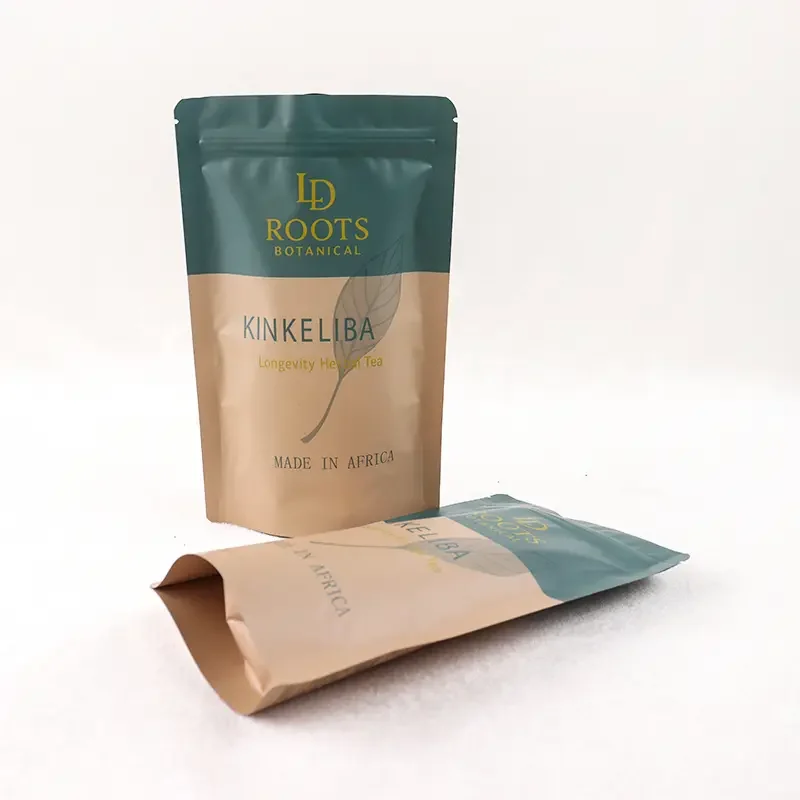
An empty glass jar for 250 g of coffee typically weighs 200 g or more. A stand up pouch that holds the same beans usually weighs 8–12 g. Coffee roasters, snack makers and supplement brands tend to notice that difference in freight weight as soon as plain bags stop getting attention on the shelf.
A doy pouch is a flexible bag with a folded, W-shaped bottom gusset. When the bag is filled, the gusset opens into an oval base and the package stands upright without a rigid frame. This guide covers the technical details you need to write a confident order spec.
Key Takeaways
- Doy pouch, doypack and stand up pouch usually mean the same format: a bag that stands on a W-shaped bottom gusset.
- The film laminate determines barrier, shelf life and recyclability. Choose it for the product, not the look.
- Digital printing suits short runs with many designs. Rotogravure and flexo pay off on large repeat volumes.
- Zippers, spouts and valves change tooling, lead time and fill-line setup.
- Get food-contact declarations and a physical sample before you approve production.

What Is a Doy Pouch and How Does It Stand Up?
A doy pouch is a three-side-seal flexible package with a bottom panel folded inward as a gusset. Once product fills the bag, the gusset spreads into a stable oval base and the pouch stands on its own. An empty pouch lies almost flat, so storing pouches and shipping them to you takes little space.
The name comes from the Doypack, a format Louis Doyen developed in the early 1960s at the French machinery company Thimonnier. The trade name became shorthand for the whole category. A flat pouch has no base at all, so it has to lie down in a bin or hang from a peg.

Doy Style vs K-Seal vs Plow Bottom Gussets
Doy style is the default for fills under about 1 kg. Heavier products usually move to a K-seal or plow bottom, which carry weight better.
| Bottom style | Seal pattern | Stability | Typical fill range | Heavy or liquid products |
|---|---|---|---|---|
| Doy style (round bottom) | U-shaped seal curving along the bottom corners | Good for light to medium loads | About 50 g–1 kg | Works for liquids with a spout; less stable past 1 kg |
| K-seal | Angled corner seals that form a “K” on each side | Better; corners carry more load | About 500 g–2 kg | Good for denser dry goods |
| Plow (folded) bottom | Gusset folded up with no seal across the base face | Flattest, squarest base | About 1–5 kg | Strong for pet food and bulk dry goods; not for liquids |
How Doy Pouch Sizes Are Specified
Converters quote size as width × height + bottom gusset, in millimetres. A 140 × 210 + 80 mm pouch is 140 mm wide and 210 mm tall, with an 80 mm gusset that folds to 40 mm inside the bag.
Fill volume matters more than fill weight. 250 g of whole-bean coffee takes up far more space than 250 g of sugar. If you size from a chart built on grams, you can end up with a bag that won’t close or one that slumps half empty.

Laminated Film Structures for Doypack Packaging
Most doypack packaging is made from a laminated film with two to four layers. The outer layer carries the print, the middle layers block oxygen, moisture and light, and the inner layer heat-seals the pouch shut. Total thickness usually runs about 80–150 microns, depending on fill weight and how much barrier the product needs.
A laminated film is a sheet made by bonding plastic, foil or paper layers so that each layer adds a property the others lack. Converters write structures as layer stacks. PET12/AL7/PE80, for example, means 12 µm polyester, 7 µm aluminum foil and 80 µm polyethylene.
Barrier Needs by Product Type
Foil laminates give the longest shelf life. Mono-material films give up some barrier in exchange for recyclability.
| Structure | Oxygen / moisture barrier | Clarity | Typical products | Recyclability |
|---|---|---|---|---|
| PET/PE | Moderate / moderate | Clear | Candy, bath salts, short-shelf-life snacks | Mixed material; rarely accepted |
| PET/AL/PE | Very high / very high | Opaque | Coffee, powders, pharma, pet treats | Not recyclable in most programs |
| PET/VMPET/PE | High / high | Opaque, metallic | Chips, nuts, ground coffee | Generally not recyclable |
| Kraft/PE (often with a VMPET or AL layer) | Low alone; high with barrier layer | Opaque, natural paper look | Tea, granola, specialty coffee | Generally not recyclable as paper or film |
| Mono-PE (with EVOH or coating) | Moderate to high / high | Clear or matte | Snacks, dried fruit, frozen foods | Recyclable where store drop-off or film collection exists |
| Mono-PP (with coated or AlOx layer) | Moderate to high / high | Clear, crisp | Granola, cookies, hot-fill sauces | Recyclable in some regions; access varies |
Start with the product’s sensitivity to oxygen and moisture. Pick the lightest structure that protects it for its full shelf life.

Recyclable and Compostable Options and Their Trade-Offs
A mono-material pouch uses a single plastic family, either all PE or all PP, so it can go into a film recycling stream. The trade-offs are real. Mono-PE feels softer, so a large pouch can slump. It also seals in a narrower temperature window, which can mean adjusting existing packing machines.
Compostable films such as PLA or cellulose blends usually have lower barrier and a shorter shelf life. Many areas still have no curbside composting or film collection, so check what your customers can actually access before you print a recycling claim.
Food-Contact and Pharma Compliance Checks
Before you approve any custom doy pouch for food, supplements or medicine, ask the converter for documents rather than verbal assurances:
- U.S. food contact: statements of compliance with FDA 21 CFR 174–178 for each resin, adhesive and ink layer.
- EU food contact: declarations under Regulation (EC) 1935/2004 and Regulation (EU) 10/2011.
- Migration testing: overall and specific migration reports from an accredited lab, run with simulants that match your product.
- Converter certification: ISO 22000, BRCGS Packaging or, for pharma, ISO 15378.
If you want a production spec reviewed against these points, YLTPACK has made custom flexible packaging since 2005. That includes zipper pouches, spouted pouches and gusseted bottom bags built to your size, film and print requirements. The company holds ISO 22000 certification, meets FDA food-contact requirements and provides free samples before production. Email your spec to Feynman@yltpacking.com to request a printed sample and quote.