A specialty roaster once approved a PET 12µ / PE 80µ laminate for whole-bean coffee because the quote looked clean and the pouch felt sturdy in hand. There was no foil layer, no metallized layer, no barrier coating — just a print film and a sealant. In a temperate home market the packs held up for a few months. Shipped into Gulf-region distribution at 35°C and high humidity, the stated 12-month shelf life collapsed to under five. The bags weren’t defective. They were simply specified without a barrier.
That mistake is the most common one in this category: treating pouch film as a single material instead of an engineered stack, and judging it by feel rather than by transmission-rate data.
By the end of this guide you’ll be able to read a laminate spec sheet, match a film structure to your product’s oxygen and moisture sensitivity, and brief a converter with numbers instead of adjectives. Structures throughout are written in standard lamination notation — outer layer first, sealant last, with thickness in microns: PET 12µ / AL 7µ / PE 80µ.
How a Pouch Structure Actually Works: The Three-Layer Logic
Food packaging pouch materials are multi-layer laminated films that typically combine an outer print layer, a middle barrier layer, and an inner sealant layer, bonded together by adhesive lamination or extrusion lamination. Each layer does one job well and nothing else. Change one layer and you change cost, shelf life, machinability, and recyclability at the same time.
Thickness is expressed in microns (µ, or µm). A typical retail pouch lands somewhere between 90µ and 220µ total, depending on fill weight and format.

Outer Layer: Print Carrier and Mechanical Protection
PET 12µ dominates this position for three practical reasons: it holds dimensional stability under web tension during high-speed printing, it takes reverse-printed ink with excellent gloss, and it resists the heat of a sealing jaw pressing through from the outside. BOPP 18–20µ is the lower-cost alternative, common on snack and biscuit packs where stiffness matters more than heat resistance.
BOPA (nylon) 15µ replaces or supplements PET where puncture resistance rules — frozen bone-in poultry, sharp-edged frozen vegetables, and anything that flexes repeatedly in cold chain. Nylon also survives retort processing where BOPP would soften.
Middle Layer: The Barrier Engine
This is where shelf life is won or lost. The options, roughly in order of barrier strength: aluminum foil (6.5–9µ), metallized PET or CPP (VMPET / VMCPP), transparent AlOx or SiOx ceramic-coated PET, EVOH co-extruded into a film, and PVDC coating on PET or BOPP.
The barrier layer is also the single biggest cost lever in the spec. Moving from VMPET to aluminum foil can add meaningful cost per square meter while extending shelf life by six months or more. Moving the other direction, when the product doesn’t need it, is pure waste.
Inner Layer: Sealant and Direct Food Contact
LDPE, LLDPE blends, CPP, and retort-grade RCPP handle the seal and the food contact surface. Two properties matter more than the material name: seal initiation temperature (how hot the jaws must run) and hot tack (how much force the seal holds while still molten, before it cools).
Sealant thickness — usually 50µ to 120µ — drives seal strength and total pouch weight more than most buyers expect. A 1kg pouch with a 60µ sealant may seal fine on a slow hand-fill line and blow out on a high-speed filler. The fix is almost always more sealant, not more barrier.
How Layers Are Bonded: Dry, Extrusion, and Solventless Lamination
Dry lamination applies a solvent-based adhesive, evaporates the solvent in an oven, then nips the webs together. It delivers high bond strength and remains standard for retort pouch lamination, where polyurethane adhesives with high thermal and hydrolytic resistance are required.
Extrusion lamination bonds layers with a curtain of molten PE, adding sealant thickness in the same pass. It runs fast and cheap on simple structures.
Solventless lamination has become the default for ambient dry goods in most modern converting plants. No solvent means no residual solvent risk, lower energy use, and faster line speeds — but bond strength develops over a curing period of roughly 24 to 72 hours, and the process is less forgiving on high-temperature applications.
| Lamination method | Typical bond strength | Residual solvent risk | Retort suitable | Best fit |
|---|---|---|---|---|
| Dry (solvent-based PU) | 2.5–6.0 N/15mm | Present; controlled by oven and testing | Yes | Retort, foil laminates, high-demand structures |
| Solventless | 2.0–4.5 N/15mm after full cure | Negligible | Limited (low-temp pasteurization only) | Dry goods, snacks, coffee, powders |
| Extrusion | 1.5–3.5 N/15mm | Low | No | Paper/PE, simple 2-ply, heavy-gauge sealants |
Reading Barrier Data: OTR, WVTR, and What the Numbers Mean for Shelf Life
Two numbers decide whether your product survives distribution. Everything else on the datasheet is secondary.
Oxygen Transmission Rate (OTR) Explained
OTR measures how much oxygen passes through one square meter of film in 24 hours, expressed as cc/m²/24hr, tested at a stated temperature and relative humidity — commonly 23°C. Test methods follow ASTM D3985 or ISO 15105.
Always demand the RH condition alongside the figure. An EVOH structure tested at 0% RH looks spectacular and behaves very differently at 90% RH, because EVOH is hygroscopic and its oxygen barrier degrades as it absorbs moisture. That’s why EVOH is buried between moisture-blocking PE or PP layers in co-extruded film. Aluminum foil has no such weakness — its barrier is physical, not molecular.
Water Vapor Transmission Rate (WVTR) Explained
WVTR measures moisture passage in g/m²/24hr, usually tested at 38°C and 90% RH per ASTM F1249. For a surprising number of products, moisture kills the product before oxidation does.
Crackers go soft. Milk powder cakes into lumps. Effervescent tablets lose fizz. Seasoning blends clump and stop dosing accurately through a sachet. When a customer describes a “stale” complaint, WVTR is usually the culprit, not OTR.
Comparative Barrier Performance
The values below are indicative ranges drawn from film supplier technical datasheets. Treat them as a shortlisting tool, then request the actual datasheet for the specific grade you’re buying.
Table 1 — Typical barrier performance by material
| Barrier material | Typical thickness | OTR (cc/m²/day) | WVTR (g/m²/day) | Transparent | Microwave safe |
|---|---|---|---|---|---|
| Aluminum foil | 6.5–9µ | <0.1 | <0.1 | No | No |
| VMPET (metallized PET) | 12µ | 0.5–2.0 | 0.3–1.0 | No | No |
| EVOH (32 mol%) in coex | 3–7µ layer | 0.5–3.0 | 20–50 | Yes | Yes |
| AlOx / SiOx-coated PET | 12µ | 0.5–2.0 | 0.5–1.5 | Yes | Yes |
| PVDC-coated PET or BOPP | 12–20µ | 3–10 | 3–8 | Yes | Yes |
| Plain PET | 12µ | 100–150 | 30–50 | Yes | Yes |
| Plain PE | 80µ | 2000–4000 | 5–10 | Yes | Yes |
Read the last two rows carefully. Plain PE is a decent moisture barrier and a terrible oxygen barrier. Plain PET is the reverse. A PET/PE laminate inherits both weaknesses, which is exactly why that coffee roaster’s shelf life fell apart.
Matching Barrier Grade to Product Sensitivity
Table 2 — Product category, required barrier tier, and primary failure mode
| Product | Primary failure mode | Minimum barrier tier | Recommended structure | Typical shelf-life target |
|---|---|---|---|---|
| Roasted whole-bean coffee | Aroma loss + oxidation | High (plus degassing valve) | PET/VMPET/PE or PET/AL/PE | 12–18 months |
| Roasted nuts, high-fat | Rancidity (lipid oxidation) | High | PET/AL/PE or PET/AlOx-PET/PE | 9–12 months |
| Powdered dairy / infant nutrition | Moisture gain, caking | Very high | PET/AL/PE, foil 7–9µ | 18–24 months |
| Dry pet food (kibble) | Fat migration, grease strike-through | Medium–high | PET/VMPET/PE, heavy sealant | 12–18 months |
| Dried fruit | Moisture loss/gain, hardening | Medium | PET/VMPET/PE or PET/AlOx/PE | 9–12 months |
| Extruded snacks, chips | Crispness loss + oxidation | Medium | BOPP/VMCPP or PET/VMPET/PE | 6–9 months |
| Sauces, pastes (ambient) | Microbial + oxidation | Very high, retort-rated | PET/AL/CPP or PET/NY/AL/RCPP | 12–24 months |
| Ready meals (shelf-stable) | Sterility loss, delamination | Very high, retort-rated | PET/NY/AL/RCPP | 12–18 months |
| Supplements, vitamins | Oxidation + light degradation | Very high, opaque | PET/AL/PE | 24 months |
| Bakery, short-turn | Staling | Low | PET/PE or BOPP/CPP | 7–30 days |
The Shelf-Life Math Buyers Should Ask For
Accelerated shelf-life testing places filled packs in controlled chambers at elevated temperature and humidity — 38°C/90% RH is a common stress condition — and models the equivalent time at normal storage. It shortens validation from 18 months to a few weeks, and it is an estimate, not proof.
Honest caveat: OTR and WVTR are film properties measured on flat sheet. A finished pouch has seals, a gusset fold, a zipper track, and a valve. Real-world failures concentrate at those points. A pouch made from a 0.1 cc/m²/day laminate with a leaking zipper performs like a paper bag.
Ask any supplier for three things before committing: the film manufacturer’s datasheet, a third-party permeation test report, and finished-pouch leak testing data. A converter that can’t produce these on request is reselling, not engineering.

Common Pouch Structures Decoded: What to Specify for Your Product
Entry-Level Structures for Short Shelf Life
PET 12µ / PE 60–80µ and BOPP 20µ / CPP 60–80µ land at 90–130µ total. They’re clear, cheap, printable, and perfectly appropriate for bakery, fresh produce, promotional packs, and anything moving in under 60 days.
Where they fail: any fatty product, any aroma-driven product, any market with a long sea-freight transit, and anything with a stated shelf life past three months. A PET/PE laminate is not a barrier film for food packaging — it’s a containment film.
Mid-Tier Metallized Structures
PET 12µ / VMPET 12µ / PE 80µ is the workhorse of the category. Total thickness typically 110–140µ, ambient shelf life of 6 to 12 months, good aroma retention, full light block. It covers most snacks, coffee, powders, and dry mixes at a cost well below foil.
The limitation is flex-crack sensitivity. Metallized layers develop microscopic fractures under repeated flexing, which is why this structure is a poor choice for frozen goods that get handled in cold conditions.
High-Barrier Foil Structures
PET 12µ / AL 7µ / PE 80µ and PET 12µ / AL 7µ / NY 15µ / PE 80µ push shelf life to 12–24 months. The aluminum foil barrier layer blocks light completely and holds its performance regardless of ambient humidity — the reason it remains standard for infant formula, vitamins, and photosensitive oils.
Adding nylon between foil and sealant improves pinhole resistance, which matters because foil at 7µ is fragile. Foil laminates cannot go in a microwave and cannot enter a mechanical recycling stream.
Retort Pouch Lamination
Retort processing sterilizes the sealed pouch at 121°C for 20–40 minutes, or 135°C for high-retort variants. Standard CPP softens and standard adhesives hydrolyze under those conditions, producing delamination that shows up as blistering between layers after cooling.
Correct specs: PET 12µ / AL 7µ / CPP 70–80µ for basic retort, PET 12µ / NY 15µ / AL 7µ / RCPP 80µ for demanding sterilization and heavier fills. Adhesives must be two-component polyurethane rated for the process temperature. Post-retort bond strength should be verified — a reasonable acceptance threshold is retention of at least 70% of pre-retort bond strength, with no visible delamination.
Frozen and Puncture-Resistant Structures
Below –20°C, films get brittle and sealant layers crack along fold lines. Nylon-containing laminates such as NY 15µ / PE 100µ or PET/NY/PE handle cold-crack behavior far better than metallized structures. Specify a sealant grade with good low-temperature impact resistance, and increase sealant thickness for bone-in or sharp-edged contents.
Structure Selection Reference
Table 3 — Common laminate structures at a glance
| Structure | Total thickness | Typical use | Shelf-life range | Max fill / process temp | Recyclable stream |
|---|---|---|---|---|---|
| PET 12 / PE 70 | ~95µ | Bakery, produce, promo | 7–60 days | 40°C | No (mixed) |
| BOPP 20 / CPP 60 | ~90µ | Biscuits, candy | 3–6 months | 60°C | No (mixed) |
| PET 12 / VMPET 12 / PE 80 | ~115µ | Snacks, coffee, powders | 6–12 months | 60°C | No |
| BOPP 20 / VMCPP 25 | ~55µ | Chips, extruded snacks | 4–8 months | 60°C | No |
| PET 12 / AlOx-PET 12 / PE 80 | ~115µ | Transparent high-barrier, visible product | 9–15 months | 90°C (hot fill) | No |
| PET 12 / AL 7 / PE 80 | ~110µ | Supplements, dairy powder, oils | 12–24 months | 90°C | No |
| PET 12 / AL 7 / NY 15 / PE 100 | ~145µ | Heavy fills, aggressive contents | 18–24 months | 90°C | No |
| PET 12 / AL 7 / CPP 70 | ~100µ | Retort sauces, soups | 12–24 months | 121°C retort | No |
| PET 12 / NY 15 / AL 7 / RCPP 80 | ~125µ | Ready meals, high retort | 12–18 months | 135°C retort | No |
| NY 15 / PE 100 | ~120µ | Frozen, vacuum, sharp contents | 6–18 months frozen | –40°C to 80°C | No |
| MDOPE 25 / PE 80 (mono-PE) | ~110µ | Dry goods, recyclable programs | 4–9 months | 50°C | Yes (PE) |
| BOPP 20 / CPP 60 (mono-PP) | ~85µ | Hot fill, pasteurizable, recyclable | 6–12 months | 95–100°C | Yes (PP) |
Pouch Formats and Their Material Implications
Format and film are not independent decisions. A bottom gusset that has to open flat and support the pack’s own weight demands more stiffness than a flat pouch ever will.
Stand-Up Pouch Material Structure Requirements
Doyen-style bottoms use a folded W-gusset with half-moon seals; K-seal bottoms use a diagonal corner seal that produces a squarer base and better shelf presence. Both rely on film rigidity to stand at low fill weights.
A sound stand up pouch material structure keeps a stiff outer web — PET 12µ or BOPA 15µ — and avoids over-thick soft sealants that make the pack slump. If a 100g pouch won’t stand, the answer is usually a stiffer outer film or a shorter, wider body, not more total microns.
Flat Pouches, Three-Side Seal, and Pillow Bags
Three-side seal pouches consume the least film per unit and run fastest on automated lines. They work well up to roughly 200g, beyond which the pack loses shape on shelf. Pillow bags (back-seal, fin or lap seal) dominate high-speed snack lines because vertical form-fill-seal equipment makes them from a single roll of film.
Neither format holds itself upright. If shelf presence matters, that’s a stand-up format decision made early, not a late-stage swap.
Spouted and Retort Pouches
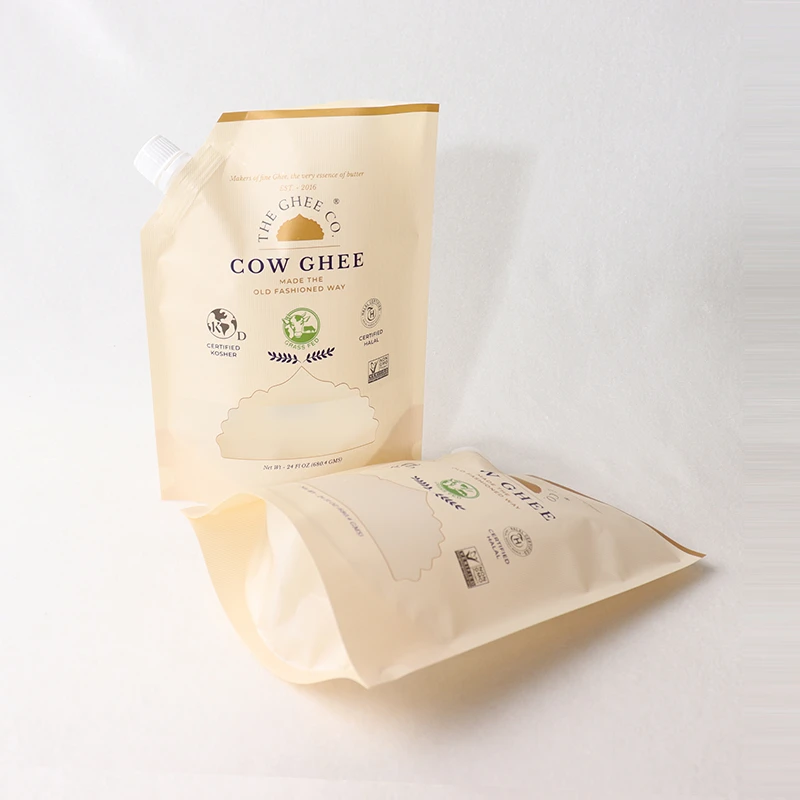
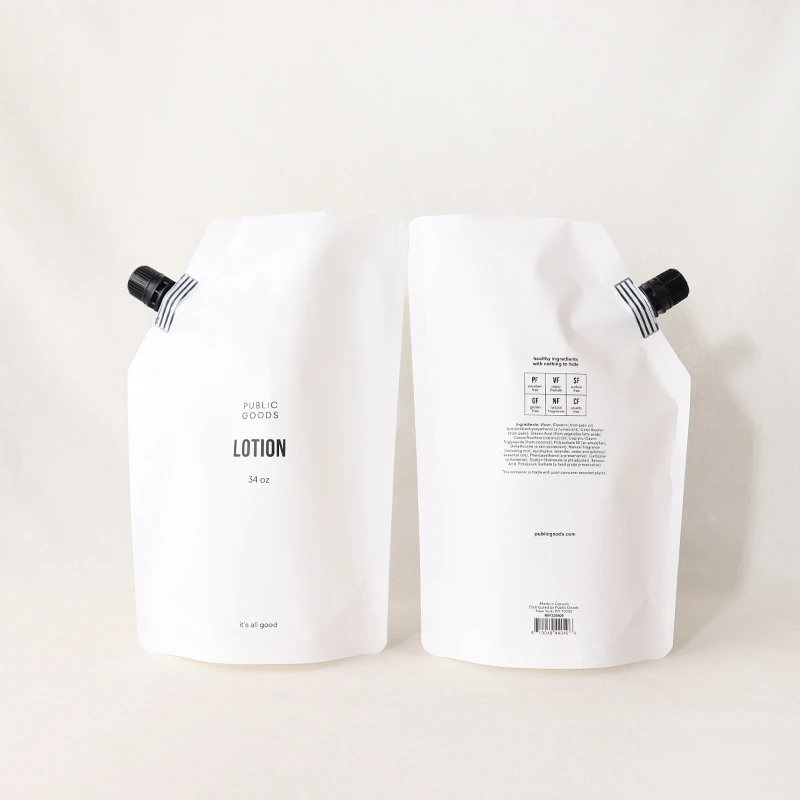
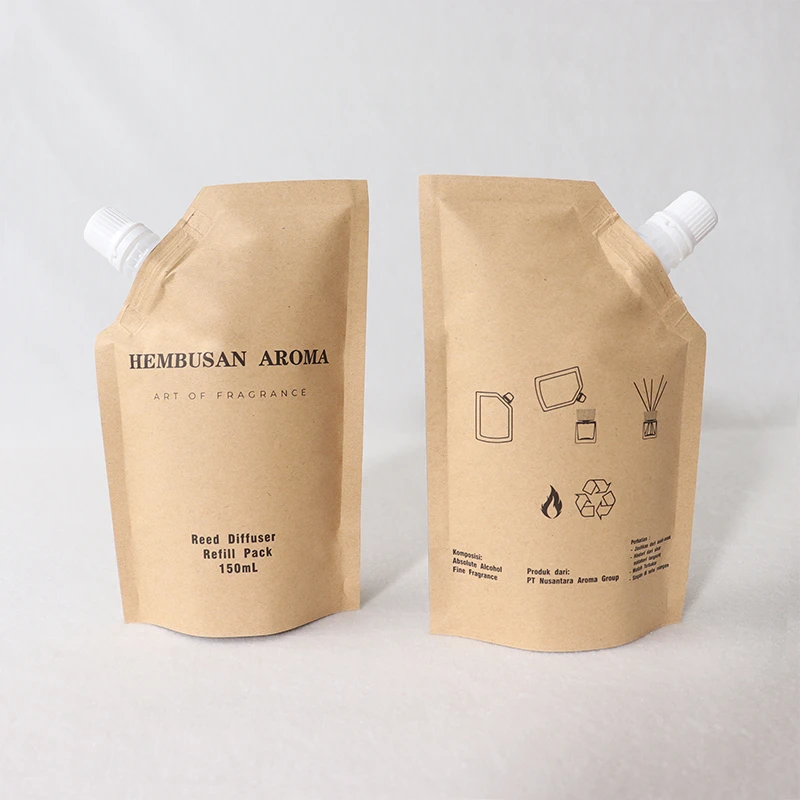
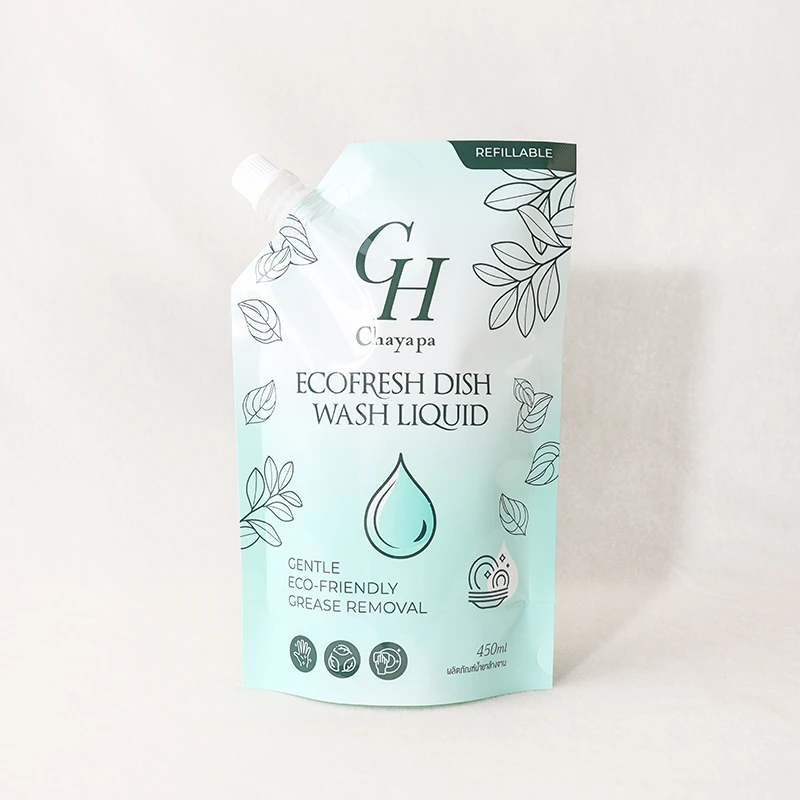
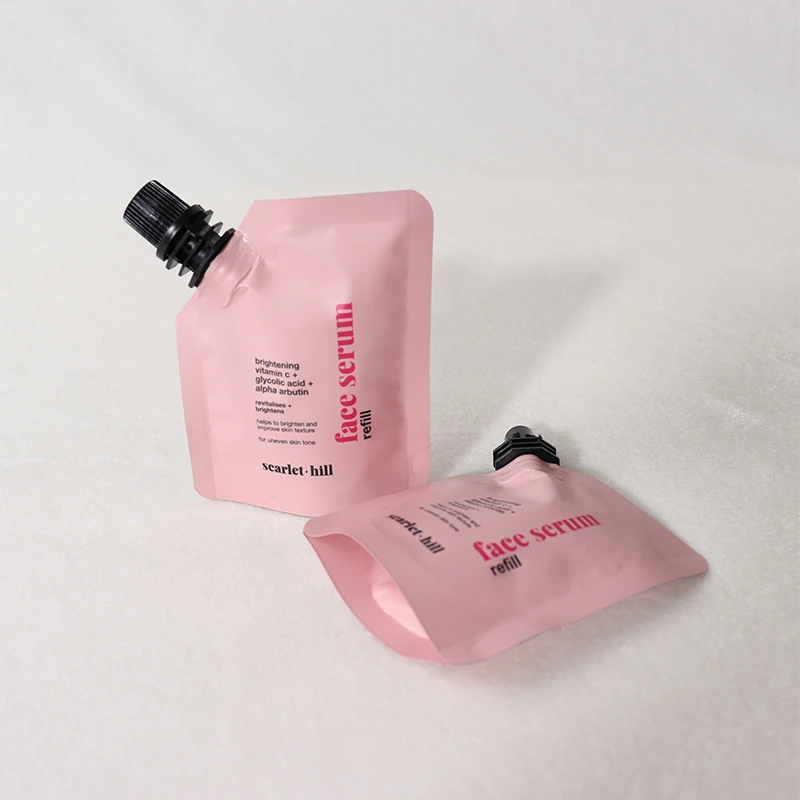
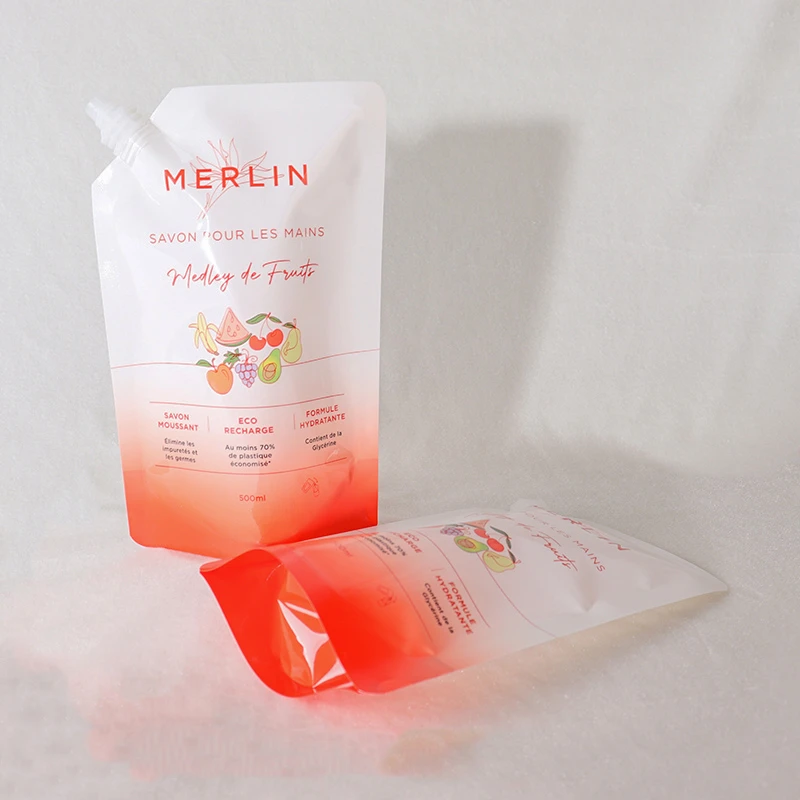
One mismatch causes more scrapped production runs than any other in this category: spout material versus sealant material. PE spouts require a PE sealant. PP spouts require a CPP or RCPP sealant. Weld a PP spout into a PE-sealant pouch and the fitment looks attached, passes visual inspection, and leaks in transit.
Check the spout resin on the fitment drawing and confirm it against the sealant resin on the film spec. Every time.
Flat-Bottom (Box Pouch) and Quad-Seal
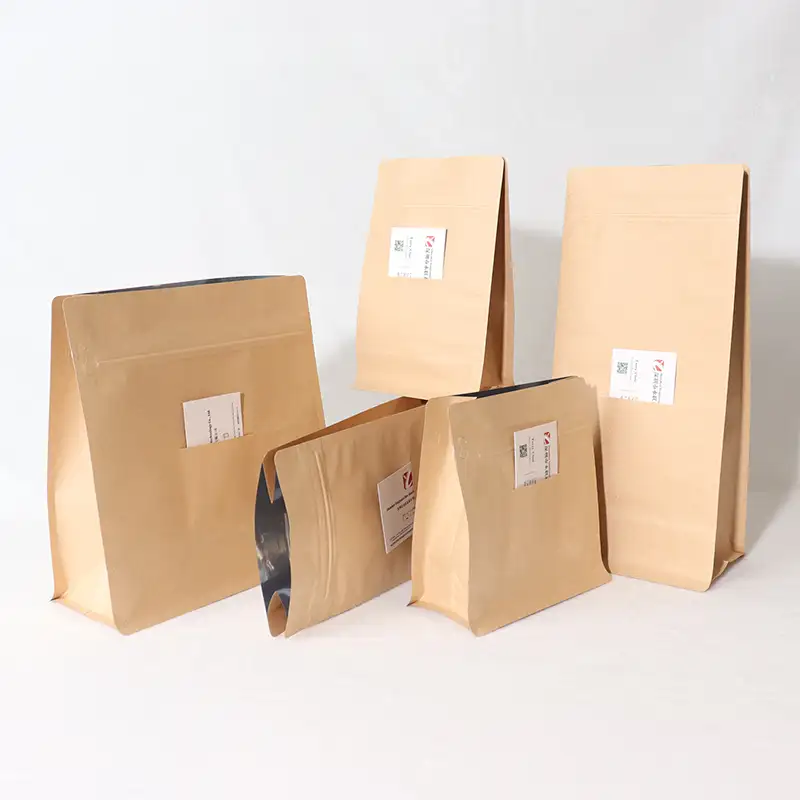
Five-panel construction gives two side gussets plus a rigid flat base, which is why coffee and pet food brands favor it. You gain two clean side panels for ingredient and regulatory copy — often 30–40% more usable print area than a comparable stand-up pouch.
The trade-off is gauge. Flat-bottom pouches generally need 130–180µ total to hold their shape, and the corner seal geometry is less forgiving of tolerance drift during converting.
Standard Pouch Size Reference
Table 4 — Common format and dimension baselines. These are frequently used starting points, not a fixed catalog. Final dimensions are built around product bulk density, headspace, and your filling equipment’s jaw and clamp settings.
| Format | W × H × gusset (mm) | Fill capacity (g) | Fill capacity (ml) | Suggested total film thickness |
|---|---|---|---|---|
| 3-side seal sachet | 70 × 100 | 10–30 g | 15–35 ml | 80–100µ |
| 3-side seal flat pouch | 100 × 150 | 30–80 g | 50–100 ml | 90–110µ |
| Stand-up pouch (small) | 100 × 150 × 30 | 50–100 g | 100–150 ml | 100–120µ |
| Stand-up pouch | 130 × 200 × 40 | 150–250 g | 250–400 ml | 110–130µ |
| Stand-up pouch | 160 × 230 × 45 | 250–500 g | 450–700 ml | 120–140µ |
| Stand-up pouch (1kg) | 200 × 300 × 55 | 800–1200 g | 1200–1800 ml | 130–150µ |
| Stand-up pouch (2kg) | 240 × 350 × 70 | 1800–2500 g | 2500–3500 ml | 150–170µ |
| Flat-bottom box pouch | 120 × 220 × 70 | 200–400 g | 400–600 ml | 130–160µ |
| Flat-bottom box pouch | 160 × 280 × 90 | 800–1000 g | 1400–1900 ml | 140–170µ |
| Quad-seal side gusset bag | 200 × 330 × 100 | 1500–2000 g | 2800–3600 ml | 150–180µ |
| Spouted pouch | 110 × 180 × 35 | – | 100–250 ml | 110–140µ |
| Spouted pouch (large) | 150 × 240 × 50 | – | 500–1000 ml | 130–160µ |
| Retort pouch (flat) | 140 × 200 | 150–300 g | 150–300 ml | 100–130µ |
| Pet food bag (5kg) | 300 × 450 × 110 | 4500–5500 g | – | 170–200µ |
A quick sanity check before you commit to dimensions: multiply internal volume by product bulk density, then leave 15–25% headspace for gas flushing and pack appearance. Pouches filled to the brim look cheap and seal badly.
Recyclable Mono-Material Pouches and the Sustainability Shift
What “Mono-Material” Actually Means
The working threshold used across most regional design-for-recycling guidelines is that a package should be at least 90–95% one polymer family by weight to enter a mechanical recycling stream without contaminating it. A PET/PE laminate fails that test because two incompatible polymers melt at different temperatures and phase-separate in the recyclate.
Any aluminum foil layer disqualifies a pouch from mechanical recycling outright. That’s a physical reality, not a policy preference.
All-PE Structures (MDOPE and BOPE Based)
Machine-direction-oriented PE and biaxially oriented PE give converters a stiff, printable PE outer web that can be laminated to a PE sealant. Add a metallized or AlOx-coated PE layer and you get a recyclable mono-material pouch with usable barrier.
The honest gaps: the processing window narrows sharply because the print film and sealant now melt at similar temperatures, so sealing jaws need tighter control. Stiffness at low gauge is weaker than PET, which affects stand-up performance. Print registration on oriented PE demands tension control that not every press can hold. Heat resistance caps the format at ambient, non-hot-fill applications.
All-PP Structures (BOPP and CPP)
Mono-PP handles heat far better — hot fill up to roughly 95°C and some pasteurization processes are workable. BOPP/CPP laminates already exist in high volume for snacks, so supply availability is good and machinability on existing form-fill-seal lines is generally straightforward.
Barrier still needs a coating or metallization, and the PP recycling collection stream is less developed than PE in several markets.
Recycled Content, PCR, and Food Contact Limits
Post-consumer recycled resin in the direct food contact layer faces regulatory restriction in most markets. Food contact material authorities generally require a documented decontamination process assessment before recycled polymer touches food — a bar that mechanically recycled flexible PE rarely clears today.
The practical approach: place PCR in the outer print layer, in the secondary carton, or in shipping film, and be precise in your on-pack claim about where the recycled content actually sits. Vague “made with recycled materials” copy invites regulatory challenge.
Compostable Films: PLA, PBS, and Kraft/PLA Laminates
Compostable laminates suit short-shelf-life products with modest barrier needs — think 3–6 month dry goods, tea, and single-serve items. PLA has a low heat-deflection ceiling and poor moisture barrier on its own; PBS improves flexibility and sealing behavior.
The caveat buyers must communicate on-pack: certified compostable films typically require industrial composting at controlled temperature and humidity, and that infrastructure is uneven by region. A compostable pouch in a landfill behaves roughly like a conventional one. Certification schemes such as EN 13432 or ASTM D6400 define what the claim actually covers — cite the scheme, not the adjective.
Conventional vs. Mono-Material vs. Compostable
Table 5 — Balanced comparison of the three routes
| Criterion | Conventional laminate (PET/AL/PE) | Mono-material (PE or PP) | Compostable (PLA/PBS/Kraft) |
|---|---|---|---|
| Oxygen barrier | Excellent (<0.1 cc/m²/day) | Moderate to good with coating/metallization | Weak to moderate |
| Moisture barrier | Excellent | Good (PE inherently strong) | Weak without coating |
| Shelf-life ceiling | 18–24+ months | 6–12 months typical | 3–6 months typical |
| Machinability on existing lines | Proven, wide processing window | Narrower sealing window; may need jaw retuning | Slower speeds, heat-sensitive |
| Heat resistance | Up to retort (135°C) | PE: ~50°C / PP: ~95°C | Low; ambient only |
| Recyclability | Not mechanically recyclable | Yes, where PE/PP flexible collection exists | Industrial composting only |
| Cost direction | Baseline | Comparable to moderately higher | Higher |
| Regulatory readiness | Fully established | Established; claims need local verification | Claim substantiation required per market |
| Print quality | Highest | Good; registration needs tight tension control | Moderate; matte, limited gloss |
Printing and Decoration on Pouch Films
Rotogravure for High-Volume Runs
Gravure engraves each color into a chrome-plated copper cylinder. Once the cylinders exist, color consistency across repeat orders is the best available — the same cylinder produces the same result a year later. Ink laydown on metallized and foil substrates is denser than any other method.
The economics turn favorable somewhere around 20,000–30,000 pouches per SKU, because cylinder tooling is a one-time investment amortized across the run. Below that threshold, the tooling dominates.
Flexographic Printing
Flexo uses photopolymer plates, which cost substantially less than cylinders and are faster to produce. Modern HD flexo with high-resolution screening has closed most of the historic quality gap, and expanded-gamut (CMYK + orange, green, violet) printing lets a converter hit a wide spot-color range without dedicated plates for each shade.
Where flexo still trails: very fine gradients and heavy solid coverage on metallized film, where gravure’s ink transfer remains superior.
Digital Printing for Short Runs and Versioning
No cylinders, no plates, no tooling wait. Digital makes sense for launch quantities, seasonal variants, regional language versions, and market testing — and for brands running 15 SKUs where gravure tooling across all of them would be prohibitive.
Constraints are real: substrate compatibility is narrower, ink migration must be assessed for direct food contact applications, and running cost per pouch stays flat as volume grows, so it loses to gravure at scale.
Table 6 — Print method comparison
| Method | Tooling required | Economical run length | Color accuracy | Typical minimum order scale | Typical lead time (working days) |
|---|---|---|---|---|---|
| Rotogravure | Engraved cylinder per color | 30,000+ pouches | Highest; excellent repeat consistency | High volume | 18–28 after approval |
| Flexography | Photopolymer plate per color | 10,000–50,000 pouches | Very good with HD screening | Medium volume | 14–22 after approval |
| Digital | None | 500–10,000 pouches | Good; batch-to-batch variance possible | Low volume, multi-SKU | 8–15 after approval |
Color Management Across Batches
For brand-critical spot colors, ΔE ≤ 2 is the tolerance most converters can hold and most brand owners should specify in writing. ΔE ≤ 3 is acceptable for secondary elements. Without a stated tolerance, “close enough” becomes the supplier’s judgment, not yours.
The same Pantone number will not look the same on white-backed film and on metallized film. Metallized substrates reflect light through the ink layer and shift the perceived hue. The standard fix is a white ink flood coat behind the color area — and it must be specified in the artwork, not assumed.
Always request a press proof on the actual production substrate. A digital proof on paper tells you almost nothing about how a color will sit on VMPET.
Surface Finishes and Functional Add-Ons
Matte varnish with spot gloss remains the most-requested premium combination, particularly on coffee and pet treat packaging. Soft-touch coating adds a tactile difference that photographs poorly and sells well in hand. Cold foil produces metallic accents without the registration difficulty of hot stamping.
Functional features carry equal weight in the spec sheet:
- One-way degassing valve — mandatory for freshly roasted coffee, which releases CO₂ for days after roasting
- Zippers — press-to-close, slider, and child-resistant variants; each changes the required pouch height by 10–15mm
- Laser scoring and tear notches — laser scoring on the outer layer only gives a clean straight tear without compromising the barrier
- Hang holes — round, euro-slot, or sombrero, sized to the retailer’s peg standard
- Window patches — visible product at the cost of a localized barrier weak point
- Steam-release valves — for microwaveable structures using PP sealants
Food Safety, Compliance, and Documentation to Request
Food Contact Regulations by Destination Market
The frameworks differ in structure, not in intent. In the United States, food contact substances are regulated under FDA rules covering permitted materials and their conditions of use. In the European Union, the Framework Regulation on food contact materials sits above a dedicated plastics regulation that governs authorized substances, migration limits, and declaration requirements. China and other markets maintain equivalent national standards for food contact plastics and composite films.
Verify current requirements with the relevant authority or a qualified testing laboratory for your destination market. A supplier’s summary is a starting point, not a legal position.
Migration Testing: Overall and Specific
Overall migration measures the total mass of substances transferring from packaging into a food simulant under defined time and temperature. Specific migration testing targets individual substances of concern — certain monomers, additives, and adhesive components — each with its own limit.
Simulant selection follows the food type: aqueous, acidic (commonly acetic acid solution), alcoholic (ethanol at varying concentrations), and fatty (vegetable oil or a substitute). Test conditions must reflect the actual worst case, including retort or hot-fill temperature and the intended storage duration. A migration report run at 40°C for 10 days does not validate a pouch that gets sterilized at 121°C.
Residual Solvent and Odor Control
Residual solvent from solvent-based printing inks and adhesives can taint sensitive products. Coffee and infant nutrition are the classic cases — both carry delicate aroma profiles that a trace solvent note destroys.
Solventless lamination and low-migration ink systems reduce the risk substantially. For solvent-based processes, request the residual solvent test result in mg/m² and confirm it meets the limit applicable in your destination market. Odor testing on the finished pouch is a cheap extra step that catches problems before they reach a consumer.
Certification and Audit Documents Worth Asking For
Facility-level certifications tell you whether a hygiene and traceability system exists. BRCGS Packaging Materials, ISO 22000, and FSSC 22000 are the recognized schemes; documented GMP practice underpins all of them. Ask for the certificate with its scope and expiry, not a logo on a website.
Order-level documentation is separate and just as important: a material declaration listing every layer and grade, a migration test report matched to your food type, a heavy metals report, and a food-grade certificate of compliance referencing the applicable regulation.
Table 7 — Compliance documentation checklist
| Document | What it proves | When to request |
|---|---|---|
| ISO 22000 / FSSC 22000 certificate | Food safety management system in place at the plant | Quotation stage |
| BRCGS Packaging Materials certificate | Audited hygiene, traceability, and site standard | Quotation stage |
| Film supplier technical datasheet | OTR, WVTR, thickness, mechanical properties | Quotation stage |
| Material declaration / structure sheet | Exact layers, grades, and thicknesses supplied | Pre-production |
| Overall migration test report | Total transfer within legal limit for your food type | Pre-production |
| Specific migration report | Individual substances within their limits | Pre-production, when triggered |
| Heavy metals report | Lead, cadmium, mercury, chromium VI compliance | Pre-production |
| Residual solvent report | Solvent residue within market limit | Per shipment for sensitive products |
| Certificate of compliance (food grade) | Declaration against the named regulation | Per shipment |
| Seal strength / bond strength report | Pouch integrity at production conditions | Per production batch |
| Retort validation report | Post-sterilization bond retention, no delamination | Pre-production for retort only |
Specifying and Ordering Custom Pouches: A Step-by-Step Workflow
Step 1 — Define the Product Profile
Write down fill weight, bulk density, fat content, water activity, aroma sensitivity, fill temperature, and whether the product is gas-flushed, vacuum packed, or filled in air. Note any sharp edges or abrasive particles.
These seven data points determine barrier tier and sealant thickness before anyone discusses artwork. Suppliers who skip this step and jump straight to price are quoting a guess.
Step 2 — Set the Shelf-Life Target and Distribution Conditions
Ambient, chilled, or frozen. Destination climate zone. Sea freight or air. Transit duration plus warehouse dwell time plus retail shelf time — the total is what the barrier has to survive, and it’s usually longer than the stated shelf life on the label suggests.
A product moving 45 days by sea into a tropical market needs a different structure than the same product sold domestically.
Step 3 — Choose Format and Dimensions
Work from fill volume plus headspace, then check three constraints: retail shelf depth, carton fit, and pallet efficiency. A pouch 5mm too wide can cost you an entire layer per pallet.
Confirm dimensions against your filling machine’s jaw width and clamp spacing before finalizing.
Step 4 — Select the Film Structure
Use Tables 1 through 3 to arrive at a candidate structure, then name one acceptable alternative. Listing an alternative gives the converter room to propose an equivalent in-stock film, which frequently shortens lead time without compromising performance.
Step 5 — Prepare Artwork Correctly
Artwork problems cause more delays than film sourcing. A correct file package includes:
- Vector artwork in AI, PDF, or EPS with all fonts outlined
- Raster images at 300 dpi minimum at final print size
- CMYK color mode plus named Pantone spot colors, with white ink specified as a separate layer where needed
- 3–5 mm bleed on all edges
- Minimum 6 pt text for positive type, 8 pt for reverse type on colored backgrounds
- Barcode at a minimum 80% magnification with quiet zones preserved, placed on a flat panel away from gussets and seals
- Dieline on its own layer, with critical copy kept 8–10 mm clear of seal areas and tear notches
Never place legally required text — allergens, net weight, expiry — across a gusset fold or a seal zone.
Step 6 — Order Quantities, Sampling, and Lead Times
Minimum order quantities track the print method and film gauge, not the supplier’s preference. Gravure requires enough volume to justify cylinder engraving. Flexo sits in the middle. Digital printing allows genuinely small runs, which is why new brands and multi-variant launches start there.
The sequence that prevents expensive mistakes:
- Digital proof — layout, copy, dieline check (1–2 working days)
- Physical sample — unprinted or digitally printed pouch in the target structure for fit, stand-up, and machine trial (5–10 working days)
- Pre-production approval — signed dieline, color targets, and structure confirmation
- Tooling — cylinder engraving or plate making (5–8 working days, gravure/flexo only)
- Mass production — printing, lamination, curing, pouch making, inspection (12–20 working days)
Curing time after lamination is not padding. Solventless adhesives need 24–72 hours to reach full bond strength, and pouches made from under-cured film delaminate. Any supplier promising a full gravure run from artwork to shipment in under two weeks is skipping a step.
Step 7 — Incoming Inspection and Acceptance Criteria
Define acceptance criteria in the purchase order, not after delivery. Practical benchmarks:
| Property | Test reference | Typical acceptance range |
|---|---|---|
| Heat seal strength | ASTM F88 / 15mm strip | ≥ 25 N/15mm (standard), ≥ 35 N/15mm (retort) |
| Bond (peel) strength between layers | T-peel, 15mm | ≥ 2.0 N/15mm; ≥ 3.5 N/15mm for foil retort |
| Total thickness tolerance | Micrometer, multi-point | ±5–10% of nominal |
| Dimensional tolerance | Width / height | ±2 mm typical |
| Print registration | Register marks | ±0.2 mm gravure, ±0.3 mm flexo |
| Color variance | Spectrophotometer | ΔE ≤ 2 for brand spot colors |
| Leak / seal integrity | Vacuum or dye penetration | Zero defects in sample plan |
| Drop test | Filled pouch, 1.2 m | No burst or seal failure |
| Coefficient of friction | ASTM D1894 | 0.2–0.4 for form-fill-seal lines |
Inquiry Specification Sheet
Table 8 — Copy this into your inquiry email. A brief with these fields filled in typically gets a technically accurate quotation in one round instead of four.
| Field | Your specification |
|---|---|
| Product and physical form | e.g. roasted whole bean coffee, degassing |
| Fill weight / volume | e.g. 500 g |
| Bulk density | e.g. 0.38 g/ml |
| Fat content / water activity | e.g. high fat, aw 0.3 |
| Fill temperature and method | e.g. ambient, nitrogen flush, automatic |
| Target shelf life | e.g. 12 months |
| Distribution conditions | e.g. ambient, 40 days sea freight, tropical market |
| Format | e.g. flat-bottom box pouch with zipper |
| Dimensions (W × H × gusset) | e.g. 130 × 240 × 75 mm |
| Film structure requested | e.g. PET 12 / VMPET 12 / PE 80 |
| Acceptable alternative structure | e.g. PET 12 / AlOx-PET 12 / PE 80 |
| Barrier target | e.g. OTR ≤ 1.0, WVTR ≤ 1.0 cc or g/m²/day |
| Print method preference | e.g. gravure, or supplier recommendation |
| Number of colors | e.g. 6 colors + white flood |
| Spot colors and tolerance | e.g. PMS 1795 C, ΔE ≤ 2 |
| Surface finish | e.g. matte varnish with spot gloss logo |
| Functional features | e.g. degassing valve, laser-scored tear line, press-to-close zipper |
| Order quantity and SKU count | e.g. 30,000 pcs across 3 SKUs |
| Destination market | e.g. United States and Germany |
| Required certifications / reports | e.g. FDA compliance, EU migration report, ISO 22000 |
| Filling equipment make and model | e.g. rotary premade pouch filler, 60 ppm |
| Required delivery date | e.g. week 14 |
Costly Mistakes Buyers Make — and How to Avoid Them
Over-Specifying Barrier for a Short Shelf-Life Product
A granola brand with a 90-day retail cycle specified PET/AL/PE because a competitor used foil. Foil bought them 24 months of protection on a product that left the shelf in three.
Match the barrier to the actual selling cycle plus a safety margin, not to the best structure available. For anything under six months with moderate fat content, metallized or coated-PET structures usually cover it.
Under-Specifying Sealant Thickness for Heavy Fills
Bottom seal blowouts on 2kg pouches are almost always a sealant problem. A 70µ sealant that performs fine at 500g fails when the pouch is dropped from pallet height with four times the mass behind the seal.
For fills above 1.5kg, start at 100–120µ sealant and validate with a filled drop test from 1.2m onto each face and corner. Test the pouches after they’ve been through actual transit conditions, not fresh off the line.
Ignoring Machine Compatibility on Existing Lines
Film stiffness, coefficient of friction, roll width, and core diameter all have to match your equipment. A laminate with a COF above 0.5 drags in the forming collar. A roll wound on a 76mm core won’t mount on a 152mm shaft.
Send your machine make, model, and running speed with the inquiry. It costs nothing and prevents a shipment that can’t run.
Approving Artwork Without a Physical Sample
Screen-to-print shift on metallized substrates is severe enough that a deep navy can land visibly purple. Monitors emit light; printed film reflects it through a mirror-like aluminum layer.
Approve color on a press proof printed on the production substrate. Never on a PDF, never on a paper proof, never on a phone screen.
Forgetting Destination-Market Labeling Rules
Allergen declaration formats, mandatory recycling marks, language requirements, and nutrition panel layouts differ across markets. A pouch printed for one region frequently cannot ship to another without a reprint — and a reprint means new tooling if the run used gravure.
Have a compliance reviewer in the destination market check the artwork before tooling is cut, not after.
Treating “Recyclable” as a Claim You Can Print Freely
Recyclability claims increasingly require substantiation tied to actual collection infrastructure in the market where the product is sold. A mono-material PE pouch is technically recyclable; whether consumers in a given city can actually put it in a bin is a separate question, and regulators look at both.
Use qualified language, reference the applicable regional recycling design guideline, and keep documentation of the structure’s polymer content by weight.
Frequently Asked Questions
What is the most common material structure for a stand-up pouch?
PET 12µ / VMPET 12µ / PE 80µ is the most widely used structure for barrier-sensitive dry goods, and PET 12µ / AL 7µ / PE 80µ takes over when shelf life needs to exceed 12 months. For short shelf-life products like bakery items, PET 12µ / PE 70µ is standard and adequate.
Which pouch material offers the highest oxygen barrier?
Aluminum foil, with typical OTR below 0.1 cc/m²/day and no sensitivity to ambient humidity. If transparency is required, AlOx or SiOx ceramic-coated PET comes closest, usually landing in the 0.5–2.0 cc/m²/day range while remaining microwave compatible.
Can food pouches be made fully recyclable?
Yes, using mono-material PE or PP structures where more than 90% of the pack weight is a single polymer family. The honest trade-off is a lower barrier ceiling — expect 6 to 12 months of shelf life rather than 18 to 24 — and recycling only works where flexible plastic collection actually exists locally.
Are pouch materials microwave safe?
It depends on both the barrier and the sealant. Any structure containing aluminum foil or metallization is not microwave safe. EVOH or coated-PET structures with a PP sealant can be, provided the pouch includes a steam-release valve or a designed vent seal to prevent pressure build-up.
How thick should a food pouch be for a 1kg fill?
A 1kg stand-up pouch typically runs 130–150µ total, with a sealant layer of 90–100µ carrying most of the seal strength requirement. Flat-bottom formats at the same fill weight usually need 140–170µ to hold their shape. Table 4 lists common baselines by format and capacity.
What is the difference between a retort pouch and a standard pouch?
Three things: the sealant is retort-grade CPP or RCPP rather than standard CPP or PE, the adhesive is a two-component polyurethane rated for sterilization temperature, and the whole laminate is validated to survive 121°C for 20–40 minutes without delamination. A standard pouch put through a retort cycle blisters and separates.
How is shelf life tested before production?
Three layers of evidence. Film permeation testing establishes OTR and WVTR on the laminate itself. Accelerated storage testing places filled, sealed pouches in elevated temperature and humidity chambers to model longer periods in weeks. Real-time validation runs the full stated shelf life under actual storage conditions and is the only definitive confirmation.
What minimum quantity is realistic for a custom printed pouch?
Digital printing supports genuinely small runs, which suits launches, market tests, and brands carrying many variants. Flexographic printing sits at medium volume per design. Gravure requires enough volume per SKU to justify cylinder engraving, which is why it’s the choice for established, high-turnover products. If you’re running several SKUs, digital often beats gravure on total outlay even at moderate combined volume.
How long does custom pouch production take?
Artwork proof takes 1–2 working days. Physical samples run 5–10 working days. Tooling for gravure or flexo adds 5–8 working days. Mass production including lamination curing, pouch making, and inspection generally takes 12–20 working days. Budget 4–6 weeks from final artwork approval to shipment for a first gravure order, and less for repeat runs where tooling already exists.
Do I need different materials for different export markets?
Often, yes. A product shipped by sea into a hot, humid market accumulates far more moisture and oxygen exposure than the same product sold domestically, which can push the specification from metallized to foil. Regulatory divergence adds another layer — migration testing requirements, recycling marks, and permitted substances differ by region. Confirm both the climate profile and the destination regulations before locking one structure across all markets.
Working With a Converter: What Good Support Looks Like
The difference between a supplier and a packaging partner shows up in the first technical conversation. A partner asks about your product’s fat content before quoting. A supplier asks only for dimensions and quantity.
YLTPACK has manufactured custom flexible packaging films and pouches since 2005, working to customer-defined structures rather than a fixed catalog. Production operates under ISO 22000 food safety management, with FDA-compliant food contact materials and supporting test documentation available per order.
Free samples are available so you can run a physical fit and machine trial before committing to a production quantity — which is exactly the step that catches spout mismatches, stand-up failures, and film stiffness problems while they’re still cheap to fix. Technical inquiries and specification reviews can be sent to Feynman@yltpacking.com.
Ask any converter you’re evaluating for film datasheets, a structure declaration, and a current food safety certificate with its scope. Those three documents separate engineering from order-taking.
Turning the Spec Into an Order
The decision sequence is always the same, and reversing it is where money gets wasted. Product sensitivity first — oxidation, moisture gain, aroma loss, or fat migration. Barrier tier second, chosen against the shelf-life target and the actual distribution climate. Format and gauge third, sized to fill weight and validated against your filling equipment. Print method last, because it depends on quantity and SKU count, not on the product itself.
Most buyers do this backward. They fall in love with a format, approve artwork, then discover the structure can’t hold the shelf life they already printed on the label.
Your next concrete step: fill in the specification sheet from Table 8, then request film datasheets with stated OTR and WVTR values plus a physical sample in the proposed structure. Run the sample on your line. Fill it, seal it, drop it.
A brief written with numbers typically cuts a quotation cycle from weeks to days. More importantly, it prevents the most expensive category of packaging error — the kind discovered after 50,000 pouches have already been printed, laminated, and shipped.