Deep-freeze storage runs at -18°C (0°F) or colder, and the film you choose has to stay ductile at that temperature while surviving repeated warm-ups every time a retail case door opens. A frozen food bag is a flexible package built from layered films that block moisture and oxygen migration, resist cold embrittlement, and hold seal integrity through thermal cycling — not simply a bag that happens to be stored cold.
Get the structure wrong and the symptoms are predictable: hairline seal cracks, frost inside the pouch, scuffed print, and a distribution center rejecting a pallet of retail-ready dumpling pouches. By the end of this guide you will know which film structures survive deep-freeze handling, how to write a spec sheet a converter can quote accurately, which compliance documents to demand before you commit, and how volume and artwork complexity actually shape lead times.
What Makes a Bag “Freezer Safe” — And Why Most Failures Are Structural, Not Material
Freezer safe packaging means the package survives frozen storage and handling. That is a different claim from “freezer-to-oven” or “microwave steam-vent,” which require heat-resistant films, validated seal systems, and a vent designed to release pressure at cooking temperature.
Buyers often conflate the two. If your cooking instructions say “microwave in bag,” that has to be engineered and confirmed in writing, not assumed because the film felt sturdy in the freezer.
The Four Stresses a Frozen Bag Must Survive
- Cold embrittlement — polymers lose elongation as temperature drops. Polyethylene sealant layers stay flexible well below -18°C; some coated and paper-based structures stiffen and crack.
- Moisture vapor transmission — water migrating out of the product and re-crystallizing on the surface is what shoppers call freezer burn. This is a water vapor transmission rate (WVTR) problem, not a temperature problem.
- Abrasion — frozen product behaves like a solid block. Bag-on-bag rubbing during palletizing and tumbling scuffs surface-printed ink.
- Thermal cycling — open-case retail freezers swing several degrees continuously. Every cycle stresses seals and pumps a little moisture through the film.
Why Bags Fail: A Diagnostic Checklist
- Seal contamination. Product fines, powder, or oil in the seal zone create channel leaks. Common with breaded items, dumpling flour dust, and marinated proteins.
- Insufficient seal-layer thickness. A thin sealant cannot flow enough to encapsulate contamination or absorb drop energy.
- Wrong film for the temperature range. Structures validated at ambient can fail their first cold drop.
- Bottom gusset impact. Frozen contents transfer nearly all drop energy to the bottom seal. Stand-up pouches fail here far more often than on side seals.
Is a Frozen Food Bag the Same as a Vacuum Bag?
No. A vacuum pouch is one subtype of frozen packaging, used where air removal extends shelf life on whole cuts and seafood. Vacuum pouches typically require higher puncture resistance and wider, stronger seals because the film is under constant load once air is evacuated.

Film Structures and Materials: Matching Layers to Product and Shelf Life
Almost every laminate follows the same logic. The outer layer carries print and stiffness, the middle layer provides barrier, and the inner layer does the sealing and touches food.
Once you think in those three jobs, resin names stop being intimidating. You are simply asking which material does each job at the lowest reasonable cost.
Common Structures and What They’re Used For
| Structure | Typical Use | Cold Performance | Barrier Level | Notes |
|---|---|---|---|---|
| PE (LDPE/LLDPE) mono-material | Bulk IQF vegetables, ice, portion bags | Excellent flexibility well below -40°C | Low to moderate | Fits PE recycling streams; limited print quality |
| PET / PE laminate | Retail frozen entrées, seafood | Good; PET adds stiffness and print clarity | Moderate | The workhorse retail structure |
| PA (nylon) / PE laminate | Bone-in meat, sharp-edged frozen items | Very good; nylon resists puncture and flex-crack | Moderate to high | Default where puncture risk is real |
| PET / AlOx or metallized / PE | Long shelf-life prepared meals, high-fat products | Good | High oxygen and light barrier | Blocks light-driven rancidity |
| PE/PE with barrier coating | Brands with recyclability commitments | Good | Moderate | Confirm local stream acceptance before scaling |
| Paper / PE or paper / barrier laminate | Premium positioning, dry frozen goods | Fair; paper can crack when very cold | Varies by coating | Cold-handling test is mandatory, not optional |
Barrier Selection: Reading OTR and WVTR Without Overspending
Oxygen transmission rate (OTR) predicts oxidation and rancidity. Water vapor transmission rate (WVTR) predicts freezer burn and ice crystal formation. Both are reported per square meter per day under stated temperature and humidity conditions — always check the test conditions, because numbers quoted at different conditions are not comparable.
High-fat, light-sensitive, or long shelf-life products genuinely need metallized or oxide-coated barrier. IQF produce that turns over in weeks usually does not, and paying for that barrier adds cost without extending anything customers notice.
Thickness, Gauge, and the Puncture Trade-off
Thickness is expressed in microns (µm) or mils, where 1 mil equals roughly 25.4 µm. Retail frozen pouches commonly land somewhere between about 80 and 140 µm total, bulk food service liners run heavier, and vacuum pouches for bone-in cuts heavier still.
Thicker is not automatically stronger. Adding 15 µm of polyethylene to a structure that keeps puncturing on bone fragments helps far less than switching the middle layer to nylon at the same total gauge.
Sustainability Options and Their Honest Limits
Mono-material PE is the most credible recyclability route for frozen applications today, because polyethylene keeps its flexibility at deep-freeze temperatures. The trade-off is a lower barrier ceiling and tighter print constraints.
Post-consumer recycled content is generally restricted in direct food-contact layers, so recycled material usually goes into the outer web with a virgin sealant inside. Compostable films remain the riskiest choice for frozen goods — several stiffen or lose seal strength under cold and moisture, so validate before committing volume.
Downgauging is the least glamorous and most reliable reduction lever: less material per bag, verified by cold drop and seal strength testing rather than by hope.
Pros and Cons: Mono-Material PE vs. Multi-Layer Laminate
| Mono-Material PE | Multi-Layer Laminate | |
|---|---|---|
| Advantages | Fits existing PE recycling streams; excellent cold flexibility; simpler supply chain; good downgauging headroom | Higher oxygen and moisture barrier; sharper print reproduction; broader puncture resistance; wider format options |
| Limitations | Lower barrier ceiling; print and finish constraints; collection stream availability varies by market; may need thicker gauge | Difficult to recycle in standard streams; recyclability claims need scrutiny; more lamination passes add cost and lead time |
Bag Formats and Structural Design: Choosing the Right Shape for Fill, Freeze, and Shelf
Format Comparison for Frozen Applications
| Format | Best For | Fill Method | Shelf Presence | Considerations |
|---|---|---|---|---|
| Flat pillow bag | Bulk IQF, food service | VFFS, high speed | Low | Lowest film consumption per unit |
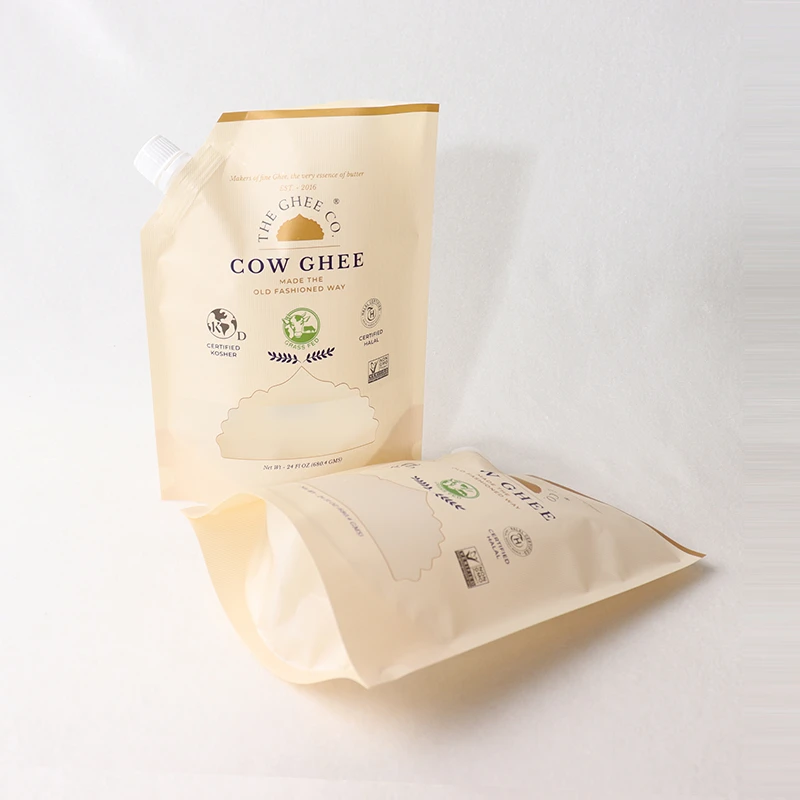
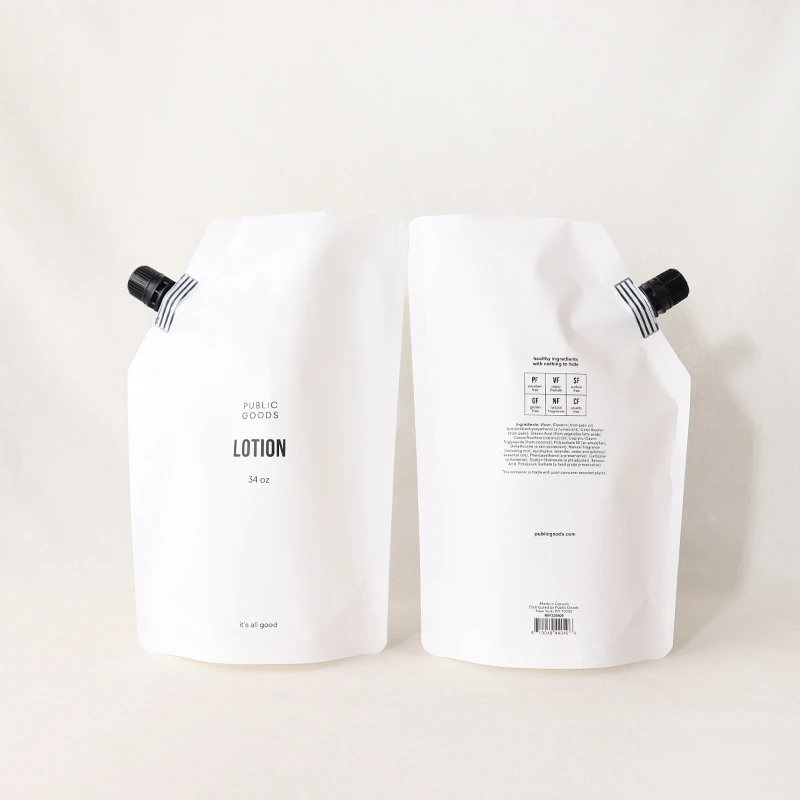
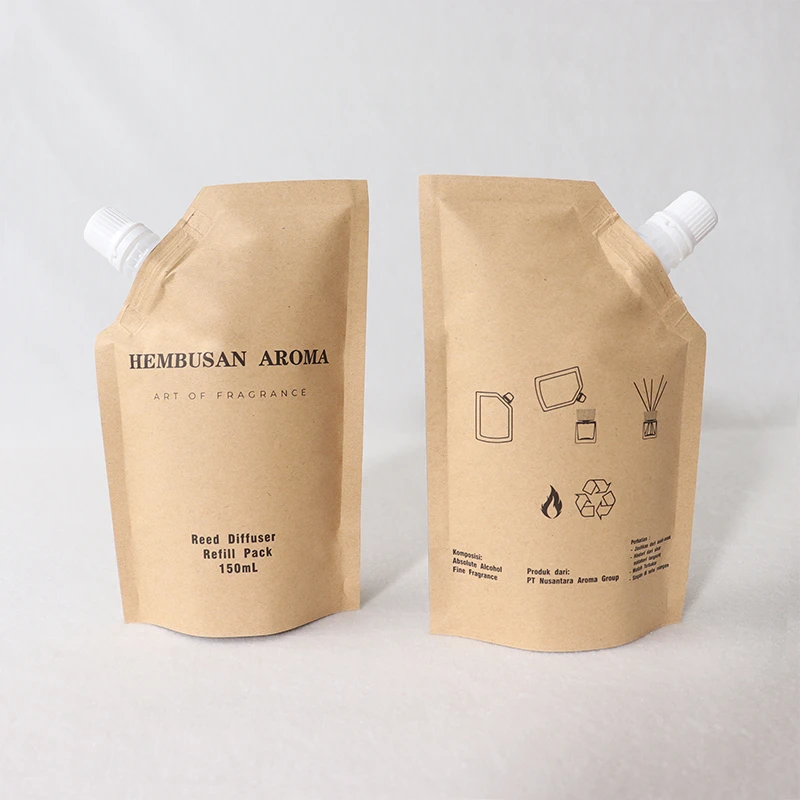
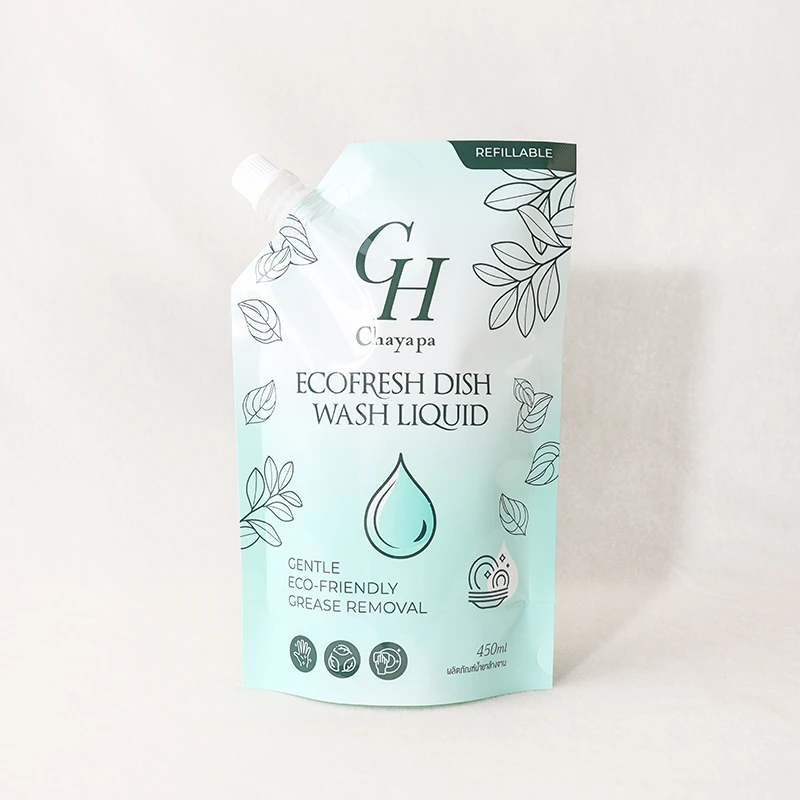
| Stand-up pouch | Retail frozen fruit, entrées | Pre-made or HFFS | High | Bottom gusset needs cold-drop validation |
| Flat bottom / box pouch | Premium retail, stackable displays | Pre-made | Highest | More film, five printable panels |
| Side-gusset bag | Large-format bulk, pet food | Pre-made or form-fill-seal | Moderate | Efficient for heavy fills |
| Vacuum pouch | Whole cuts, seafood | Chamber machine or rollstock | Moderate | Seal width and puncture resistance critical |
| Roll stock film | Automated in-house lines | VFFS/HFFS | Not applicable | Most efficient at volume; must match the machine |
Closures and Convenience Features
Not every zipper works cold. Press-to-close profiles molded from cold-rated resin stay pliable, while some economy zippers crack after a few open-close cycles at -18°C. Slider closures add shelf appeal but more failure points.
Tear notches deserve a real cold test too. Laser scoring gives a cleaner, more repeatable opening on laminates than a die-cut notch, and steam-vent valves are required for any bag meant to go from freezer to microwave.

Seal Design and Drop Performance
Wider seals tolerate contamination and impact better. Many frozen retail pouches run seals in the 8–12 mm range, with reinforced or radiused bottom corners on stand-up formats to spread drop energy.
Specify the drop test at your actual storage temperature. A pouch that passes an ambient drop test can shatter at -18°C, and that single line in a purchase order prevents the most expensive category of field failure.
Machine Compatibility: The Spec Most Buyers Forget
If you are buying roll stock, the converter needs roll width, core diameter, maximum roll outer diameter, unwind direction, splice policy, coefficient of friction, and your sealing temperature window. For pre-made pouches, they need the pouch machine’s gripper and registration requirements.
Send the filling machine make and model in your first inquiry. It is the difference between a film that runs on day one and a requalification cycle that costs weeks.
Printing Methods, Color Management, and Getting Frozen-Case Artwork Right
Flexo, Rotogravure, and Digital Compared
| Method | Volume Sweet Spot | Setup Investment | Color Consistency | Best Use |
|---|---|---|---|---|
| Flexography | Mid to high volume | Moderate plate cost per color | Very good with modern HD plates | Most retail frozen packaging |
| Rotogravure | High volume, long-running SKUs | High cylinder cost | Excellent, especially photographic imagery | Established national brands |
| Digital | Low volume, many SKUs, market tests | Minimal — no plates | Good and improving | Launches, seasonal and regional variants |
Surface Print vs. Reverse Print in a Freezer
Reverse printing places ink on the inside face of the outer web, so the film itself shields the graphics from scuffing by frozen blocks and from condensation once the pack warms. For laminated frozen food packaging bags, reverse print is the default.
Surface print with an overlacquer is acceptable on mono-web bulk bags and food service liners where appearance matters less than cost — provided you test scuff resistance on a frosted sample, not a clean one.
Color Management for Cold and Condensation
Specify spot colors for brand-critical elements and process for photography. Ask for a measured tolerance — a ΔE target in the range of 2 to 3 for key brand colors is a reasonable commercial expectation on flexible film, tighter than that gets expensive.
Frost changes everything. A gloss finish shows condensation streaks clearly, while matte diffuses light and hides frost better but can mute saturated colors under cold-case LED lighting. Approve a signed physical proof printed on your actual substrate, then look at it inside a freezer case, not on a desk.
Legibility and Barcode Reliability on Frozen Surfaces
Cooking instructions should be set large enough to read through condensation — many brands hold a 7 pt minimum on body copy and go larger on allergen and reheating text. Keep high contrast; reversed white type on a busy photograph is the first thing to become unreadable.
Protect barcode quiet zones and avoid placing codes across a gusset fold or a wrinkle-prone panel. Verify scan rates on a frosted, slightly wet sample before approving artwork.
Compliance, Testing, and Documentation to Request Before You Commit
Food-Contact Requirements by Destination Market
Compliance attaches to where the product is sold, not where the bag is made. For the United States, request food-contact compliance statements referencing the applicable FDA regulations for each material in the structure. For Europe, ask for a Declaration of Compliance under Framework Regulation (EC) 1935/2004 and Regulation (EU) 10/2011 for plastic layers, with migration data.
Other markets have their own equivalents, and a single laminate can require different paperwork per country. Collect it per market, before shipment.
Certifications and Audits Worth Verifying
Look for BRCGS Packaging Materials, ISO 22000 or FSSC 22000, and documented GMP. Then check one detail buyers routinely skip: confirm the certificate names the plant that will actually print and laminate your order, not a sister site or a trading office.
YLTPACK has manufactured flexible food packaging since 2005 and holds ISO 22000 certification alongside FDA-compliant food-contact documentation, and we provide site-specific certificates and migration test reports on request rather than a generic company brochure.
Tests to Specify in Your Purchase Order
- Cold drop test at your intended storage temperature, filled to target weight
- Seal strength and burst testing, before and after freeze-thaw exposure
- WVTR and OTR verification on the finished laminate
- Freeze-thaw cycling, typically several cycles between -18°C and refrigerated or ambient
- Ink adhesion, tape pull, and scuff resistance on a frosted surface
- Overall and specific migration testing for the destination market
Labeling Requirements That Shape Artwork Layout
Allergen declarations, storage and reheating instructions, net weight placement, country-of-origin marking, and recycling symbols all consume panel space and vary by market. Lock these requirements with a regulatory advisor before layout, because retrofitting a mandatory panel after plates are made is a costly revision.
Writing a Spec Sheet Suppliers Can Quote Accurately
Step 1 — Define the product and cold chain. Product type, fat content, fill weight, sharp edges or bones, target shelf life, storage temperature, and whether the pack ever sees an oven or microwave.
Step 2 — Lock format and dimensions. Give width, height, gusset depth, and target fill volume. A filled physical sample communicates more than any drawing, because it shows how the product settles and where it stresses seams.
Step 3 — Specify material, barrier, and thickness as ranges. State a performance target rather than one fixed structure. That lets an experienced converter propose an equivalent laminate that may run better or cost less.
Step 4 — Detail print, finish, and color standards. Number of colors, spot versus process, finish, proof approval sequence, and your ΔE tolerance.
Step 5 — State volume tiers and order cadence. Minimum order quantities move sharply with print method — digital allows short runs, flexo needs enough length to justify plates, and rotogravure assumes long-running volume. Ask for tiered quantity breaks and, if your forecast is stable, a blanket order with scheduled releases so you gain volume pricing without warehousing a year of stock.
Step 6 — Set sampling and approval milestones. The normal stage gates are quote, structure proposal, digital proof, physical proof on substrate, pre-production sample, first article inspection, then mass production. Artwork revisions cause most schedule slips, not manufacturing, so name an internal approver and a decision deadline for each proof round.
Copy-Ready Spec Sheet Template
| Field | Your Input | Why the Supplier Needs It |
|---|---|---|
| Product & fill weight | Determines gauge and seal design | |
| Storage temperature | Drives resin and sealant selection | |
| Target shelf life | Sets the barrier requirement | |
| Bag format & dimensions | Tooling and film width | |
| Structure / barrier target | Basis for quotation | |
| Closure features | Additional converting steps | |
| Print method & number of colors | Plate or cylinder requirements | |
| Annual volume & release schedule | Tier structure and capacity planning | |
| Destination markets | Compliance documentation set | |
| Filling machine make/model | Roll spec, COF, sealing window | |
| Required test reports | Quality gating before release |
Evaluating and Qualifying a Frozen Food Pouch Supplier
Questions That Separate Converters from Traders
- Which operations are in-house — printing, lamination, slitting, pouch making, zipper application?
- Which audit certificates cover the production site, and when was the last audit?
- What cold-chain testing equipment is on site — drop tester, seal strength tester, freeze-thaw chamber, WVTR/OTR analysis or an accredited lab partner?
- How is color matched on a reorder twelve months later, and are density and ΔE records retained per run?
A trader can promise all of this. A converter can show you the equipment list, the run records, and the retained samples.
Sample and Trial-Run Protocol
- Unprinted structure samples first. Test cold flexibility, puncture, and seal strength before spending a dollar on artwork.
- Printed proofs second. Check color, scuff resistance, and barcode scanning on a frosted sample.
- Machine trial third. Run the film or pouches on your actual filling line at production speed before committing full volume.
YLTPACK provides free samples at each of these stages, and structures are built to the customer’s specification rather than pulled from a fixed catalog — which matters when your product has bones, sauce, or an unusual fill weight.
Tooling Ownership and Continuity Planning
Settle in writing who owns the plates or gravure cylinders, where they are stored, how long they are retained without a reorder, and what happens if you move production. Tooling ownership is the single most common source of friction when a brand changes suppliers.
For any SKU that carries meaningful revenue, plan a second source early. Qualifying a backup takes weeks when nothing is wrong and is nearly impossible during a stockout.
Freight, Packing, and Film Storage
Ask how bags are packed — carton count, inner liner, and whether cartons are palletized and stretch-wrapped. Ocean freight through humid ports can introduce moisture into cartons, and damp film seals poorly.
Store finished bags and roll stock in a cool, dry area away from direct sunlight, ideally on the original cores and pallets. Films age, and adhesive and sealant performance can drift if stock sits for many months in a hot warehouse.
Cost Drivers Behind a Frozen Food Bag Quote
What Moves a Quote Up or Down
| Driver | Direction | Explanation |
|---|---|---|
| Structure complexity | Up | Each additional layer adds a lamination pass and curing time |
| Number of print colors | Up | More plates or cylinders and longer press setup |
| Order volume | Down per unit | Setup amortization and better material purchasing |
| Format complexity | Up | Box pouches and gussets require extra converting steps |
| Closure features | Up | Zippers, sliders, and valves are added components and stations |
| Downgauging | Down | Less film per bag — only if performance testing still passes |
| SKU consolidation | Down | One shared structure across several product lines |
Where Cost Reduction Usually Backfires
Three savings decisions reliably cost more than they save: under-specified barrier that produces freezer burn complaints and returns, a thinned sealant layer that fails cold drop after the film is already printed, and a low-cost zipper that cracks in a customer’s freezer.
Judge quotes on total cost of ownership — film cost plus line efficiency, damage rate, and return risk. A bag that runs 5% slower on your filling line erases most material savings on the first shift.
Common Mistakes and Field-Tested Best Practices
Nine Mistakes on a First Frozen Packaging Order
- Testing samples only at room temperature.
- Approving artwork on a monitor instead of on the printed substrate.
- Omitting filling machine specifications from the inquiry.
- Skipping migration and food-contact documentation until after shipment.
- Ordering a full year of volume before a line trial.
- Choosing a compostable film for deep freeze without cold validation.
- Ignoring condensation effects on label adhesion and barcode scanning.
- Running a hero SKU on a single source with no backup.
- Underestimating how many artwork revision rounds internal review will take.
Checklist Before Releasing Mass Production
- Signed physical proof on the production substrate
- Passed cold drop test at storage temperature, filled to weight
- Seal strength report, including post freeze-thaw values
- Compliance declaration on file for every destination market
- Completed trial run on your own filling line
- Tooling ownership and storage location documented in the order
Frequently Asked Questions
What thickness should a frozen food bag be?
It depends on fill weight and edge sharpness. Retail pouches for fruit, vegetables, and prepared meals commonly run in the 80–140 µm range, bulk food service liners go heavier, and vacuum pouches for bone-in cuts heavier still. Structure matters as much as gauge — a nylon-containing laminate often outperforms a thicker all-polyethylene bag against punctures.
Can frozen food bags go from freezer to microwave or oven?
Only if engineered for it. Microwave-ready packs need a steam-vent valve or laser-scored vent and a sealant validated at cooking temperature; oven-capable packaging requires heat-resistant films that most standard frozen laminates do not use. Get written confirmation of the temperature and time limits from your supplier before printing any cooking instruction on the bag.
Are recyclable frozen food bags reliable in deep freeze?
Mono-material polyethylene performs well in deep freeze because PE stays flexible far below -18°C, so it suits IQF produce, portion bags, and many retail applications. The honest caveats are a lower barrier ceiling for high-fat or long shelf-life products, some print limitations, and the fact that store drop-off or curbside acceptance for flexible film varies significantly by region.
What is the minimum order quantity for custom frozen food bags?
It is set by print method and format rather than by a single universal number. Digital printing supports short runs for launches and market tests, flexography needs enough length to amortize plates, and rotogravure assumes long-running volume. Quantities are confirmed per project once structure, size, and color count are fixed.
How long does a custom frozen food bag order take?
Break the timeline into four stages: artwork and structure approval, tooling (plates or cylinders), production including lamination curing, and shipping. Manufacturing is the predictable part; approval cycles are the variable stage, and every extra proof round adds days before the press is even scheduled.
How do I stop freezer burn in flexible packaging?
Freezer burn is moisture leaving the product and re-freezing on the surface, so attack it on four fronts: an adequate moisture barrier, leak-free seals verified by burst or dye testing, minimal headspace or vacuum where the product allows, and a stable storage temperature with limited cycling. A high-barrier film cannot compensate for a contaminated seal or a warm-swinging freezer case.
Do I need different documentation for different export markets?
Yes. Food-contact compliance follows the destination market, so a bag sold in both the United States and the European Union needs FDA-referenced statements and an EU Declaration of Compliance with supporting migration data. Collect the correct document set per market before shipment rather than after customs raises a question.
Can existing artwork be reused across bag formats?
Not by resizing alone. A stand-up pouch, a flat bottom pouch, and a pillow bag have different panel geometry, seal areas, gusset folds, and safe zones, so logos and mandatory text need re-layout to stay legible and clear of folds. Plan for a genuine adaptation step and a fresh proof for each format.
Your Next Step: Turn Requirements Into a Quotable Spec
The decision path is short when you take it in order. Define the cold-chain stress your product actually faces, choose the film structure that matches that stress instead of the cheapest one on the table, then lock compliance documentation and cold-temperature testing before you release volume.
Fill in the spec sheet template above and send it with a filled product sample. That combination is enough for a structure recommendation, a tested pre-production sample, and a quotation you can rely on.
Attach these seven items to get a useful response on the first exchange:
- Product photo and a filled sample if you can ship one
- Fill weight and bag dimensions or target volume
- Storage temperature and target shelf life
- Destination markets for compliance paperwork
- Estimated annual volume and release schedule
- Filling machine make and model
- Artwork files or a rough layout, if available
Ready to test a structure before you commit? YLTPACK has been building custom frozen food bags to customer specification since 2005, with ISO 22000 certification, FDA-compliant food-contact documentation, and free samples so you can run a cold drop test and a line trial on your own equipment first. Send your spec sheet and product details to Feynman@yltpacking.com for a structure recommendation and a pre-production sample.