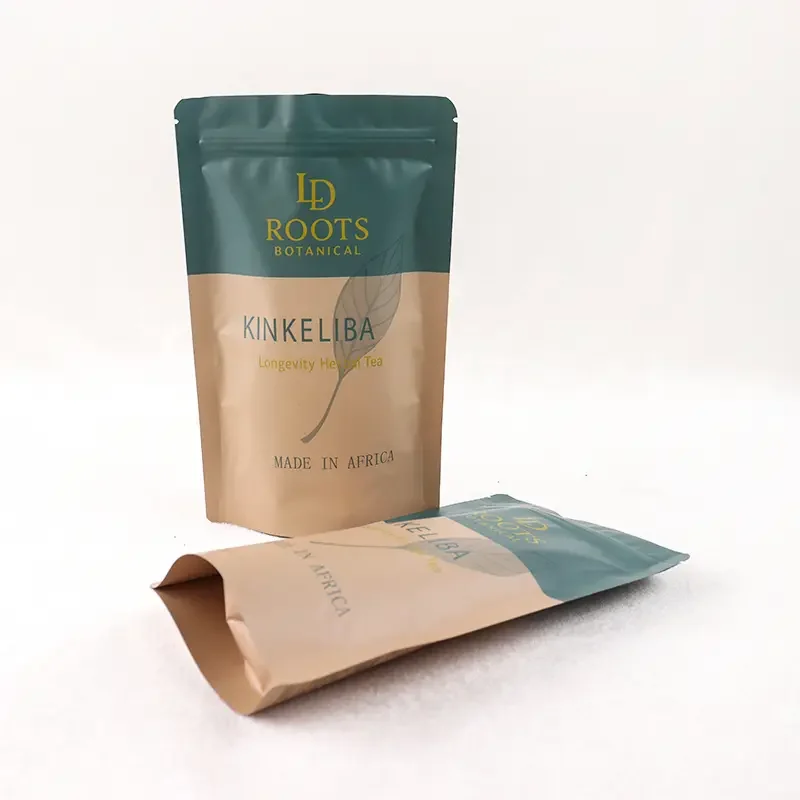
Stale chips and rancid cashews are usually packaging failures. The recipe is rarely the problem. When a fried snack goes soft weeks before its date code, the cause is typically a laminate that lets in too much oxygen or moisture, or a seal that fails during shipping. This guide covers which bag format, film structure, print method and compliance documents to ask for, and how a custom order runs.
Key Takeaways
- Fried snacks and nuts need low oxygen transmission. Crackers and cookies need low moisture transmission.
- Nitrogen flushing plus a metallized or foil laminate is still the standard protection for fried snacks.
- Stand up pouches suit resealable retail products. Pillow bags suit high-volume chip lines.
- Digital print fits short runs and launches with many flavors. Rotogravure becomes cheaper per bag as volume per design grows.
- Before switching to recyclable film, test it for barrier and seal strength. Ask for migration reports with every quote.

What Are Snack Food Packaging Bags, and What Must They Do?
Snack food packaging bags are multi-layer flexible bags, usually two to four bonded films, that block oxygen, moisture, light and aroma loss while carrying the brand on shelf. A well-specified bag keeps a snack’s texture and flavor for its full labeled shelf life. That is commonly 3 to 12 months, depending on the product.
A laminate is a single flexible sheet made by bonding several films together with adhesive or extruded resin. Each layer has a job. The outer layer (PET or BOPP) carries the print. The middle layer (aluminum foil, metallized film or a coated film) provides the barrier. The inner layer (PE or CPP) melts to form the seal.
Every snack bag has four jobs, and a spec sheet should cover all of them:
- Barrier: Slow down the oxygen that turns frying oil rancid and the moisture that softens crackers. Block the light that degrades flavor and color.
- Physical protection: Survive filling, palletizing, trucking and shelf handling without pinholes, seal leaks or crushed product.
- Convenience: Open cleanly and reclose if the portion is larger than a single serving. Hang or stand the way the retailer displays it.
- Shelf impact: Tell a shopper what the product is and why it costs what it does, in about two seconds, from 1.5 meters away.
Most of the decisions below come down to balancing barrier against cost, and shelf appeal against recyclability.

Which Pouch Format Suits Your Snack and Your Filling Line?
The right snack pouch format depends mainly on how the product is filled and how the bag will be displayed, with portion size as the tiebreaker. Chip brands running vertical form-fill-seal machines usually buy printed rollstock for pillow bags. Nut, jerky and granola brands filling by hand or on rotary machines usually buy pre-made stand up pouches.
| Format | Shelf Display | Fill Compatibility | Reclose Options | Typical Snacks |
|---|---|---|---|---|
| Stand up pouch | Stands upright, large front panel | Pre-made; hand fill or rotary pouch machine | Press-to-close or slider zipper | Nuts, jerky, granola, dried fruit |
| Pillow bag (from rollstock) | Lies flat or hangs on clip strips | Vertical form-fill-seal, high speed | Rare; usually single-use | Potato chips, puffed snacks, pretzels |
| Flat-bottom (box) pouch | Stands like a carton, five printable panels | Pre-made; slower filling | Slider or pocket zipper | Large-format nuts, trail mix, gift packs |
| Three-side seal | Flat, hang-hole display | Pre-made or horizontal machines | Optional zipper | Single servings, sample packs |
| Side gusset bag | Stands when filled, narrow footprint | Pre-made or vertical machine | Tin tie or zipper | Popcorn, cookies, bulk crackers |
| Rollstock film | Becomes pillow or gusseted bag on line | Vertical or horizontal form-fill-seal | Depends on finished bag | Any high-volume snack |
In short, the format follows the filling equipment you already own. If you are buying new equipment, choose the format first and the machine second.
Stand Up Pouches for Snacks
A stand up pouch is a pre-made bag with a folded bottom gusset that opens into a base when filled, so the pouch stands on the shelf without support. On mid-size snack bags the gusset is typically 30–50 mm deep. That gives a stable base and a flat front panel that works like a small billboard.
Stand up pouches for snacks dominate the nut, jerky and granola aisles because these products are eaten over several sittings. A zipper turns a 200 g bag into a pantry item instead of something that has to be finished in one go. The trade-off is filling speed. According to typical equipment specifications, rotary pre-made pouch machines run at roughly 30–60 bags per minute. Vertical form-fill-seal lines often exceed 100.

Pillow Bags and Rollstock for High-Speed Lines
Vertical form-fill-seal (VFFS) is a packaging machine that pulls printed film off a roll, forms it around a tube, seals the back fin, drops in the product and seals the bag closed in one continuous cycle. Rollstock is the printed, laminated film supplied on that roll. It is the default for chips and puffed snacks.
Before ordering rollstock, confirm these details with the machine manufacturer:
- Film width: Roughly twice the bag width plus the fin-seal allowance, usually 15–25 mm in total.
- Core size: 76 mm (3-inch) or 152 mm (6-inch) inner diameter.
- Maximum roll diameter: Often 400–600 mm, set by the unwind stand.
- Eye-mark position and unwind direction: These must match the photo sensor and the threading path.
- Splices per roll: Many lines specify a maximum of one or two, flagged with colored tape.
Barrier Film Laminates: Matching Material Structure to Shelf Life
Snack shelf life is set mainly by two numbers on a laminate spec sheet: oxygen transmission rate (OTR) and water vapor transmission rate (WVTR). OTR is the volume of oxygen that passes through one square meter of film in 24 hours. WVTR is the mass of water vapor that does the same. Lower figures mean slower staling and rancidity.
The table below shows indicative ranges for common barrier film laminates. They are compiled from typical converter datasheets. Actual values depend on film gauge, metallization density and test conditions.
| Structure | OTR (cc/m²/24h) | WVTR (g/m²/24h) | Light Block | Transparency |
|---|---|---|---|---|
| PET / AL foil / PE | <0.1 | <0.1 | Complete | Opaque |
| PET / VMPET / PE | 0.5–2 | 0.3–1.0 | High | Opaque |
| BOPP / VMCPP | 5–50 | 0.2–0.8 | Moderate to high | Opaque |
| AlOx or SiOx PET / PE | 0.5–3 | 0.5–2.0 | Low | Clear |
| Kraft / VMPET / PE | 1–3 | 1.0–2.0 | High | Opaque |
| Mono-PE with EVOH layer | 1–5 | 1.5–4.0 | Low unless pigmented | Clear or white |
Foil remains the benchmark for oxygen and moisture. BOPP/VMCPP is the workhorse chip structure because chips sell quickly and the film runs fast on VFFS lines.

Reading OTR and WVTR Numbers on a Spec Sheet
OTR is usually measured per ASTM D3985 at 23 °C and 0% relative humidity (RH). WVTR is usually measured per ASTM F1249 under tropical conditions of 38 °C and 90% RH. Some barrier materials, EVOH in particular, lose much of their oxygen barrier as humidity rises. A figure tested at 0% RH can look several times better than the same film tested at 75% RH.
Units cause confusion too. Some US datasheets report per 100 square inches, and 1 cc/100 in²/day equals roughly 15.5 cc/m²/day. Before comparing two suppliers, ask for the test standard, temperature, humidity and film gauge. Ask as well whether the sample was tested flat or after a Gelbo flex test (ASTM F392), which simulates handling damage.
Foil vs Metallized vs Clear High-Barrier Film
Aluminum foil, usually 7–9 µm thick, gives near-total barrier. It is also prone to flex-cracking, meaning microscopic fractures that form when the film is creased repeatedly, as happens with a bag of nuts bouncing in a delivery truck. Once the foil cracks, the barrier drops sharply.
Metallized film is plastic film coated with a vacuum-deposited aluminum layer only nanometers thick. It costs less than foil, tolerates flexing better and is lighter. Its barrier is lower, so the choice depends on the target shelf life.
Clear AlOx- or SiOx-coated PET lets shoppers see the product, which matters for granola clusters or freeze-dried strawberries. These coatings are thin ceramic layers. They can crack if the film is overstretched during lamination or pouch making, so ask for OTR data measured on finished pouches, not just roll film.
How Do Nitrogen Flushing and Resealable Zippers Keep Snacks Fresh?
Nitrogen flushing keeps snacks fresh by replacing the air in a bag with food-grade nitrogen just before sealing. This typically cuts residual oxygen to roughly 1–3%, compared with about 21% in normal air. Less oxygen slows the fat oxidation that makes chips and nuts taste rancid, and the gas cushion protects fragile chips from crushing.
Flushing only works if the film holds the gas in. A high-OTR film lets oxygen back into the bag within weeks, which is why flushing and barrier film have to be specified together. Run checks with a headspace oxygen analyzer on samples pulled at the start, middle and end of each shift. Jerky producers often add an oxygen absorber sachet to push residual oxygen well below 1%.
The “air” in a chip bag is deliberate. US FDA rules on slack fill (21 CFR 100.100) recognize protection of the contents as a legitimate reason for headspace. The nitrogen cushion is why a 28 g bag of kettle chips survives a lunchbox.
A resealable zipper pouch extends freshness after opening. Common convenience features include:
- Press-to-close zipper: The standard reclose, usually placed 25–40 mm below the tear line.
- Slider zipper: Easier for children and older adults, and common on larger flat-bottom pouches.
- Tear notches: Small cuts on the side seals that start a clean tear.
- Laser scoring: Partially cuts the outer layer for a straight tear without weakening the barrier.
- Windows: Clear areas that show the product. They reduce light protection, so they are best kept small on oily snacks.
- Hang holes: Round or sombrero-style punches for peg-hook display.
Matching Bag Specs to Your Snack Type
Each snack category has a typical laminate structure and feature set, chosen to counter its main spoilage risk. Oily snacks need oxygen barrier first. Baked goods need moisture barrier. Freeze-dried products need both, at the highest level. The thickness figures below are typical total laminate gauges used by flexible packaging converters, not fixed rules.
| Snack | Main Risk | Recommended Laminate | Thickness (µm) | Key Features |
|---|---|---|---|---|
| Potato chips, puffed snacks | Oxidation, breakage | BOPP / VMCPP | 40–55 | Nitrogen flush, VFFS rollstock |
| Roasted nuts, granola | Rancidity, moisture | PET / VMPET / PE or PET / AL / PE | 90–130 | Zipper, stand up base |
| Jerky, meat snacks | Oxygen, mold | PET / AL / PE | 100–140 | Oxygen absorber, zipper, puncture resistance |
| Cookies, crackers | Moisture pickup | BOPP / VMPET / PE | 50–90 | Easy-open, tray compatible |
| Ready-to-eat popcorn | Moisture, grease show-through | Kraft / VMPET / PE or BOPP / VMCPP | 60–100 | Side gusset, grease resistance |
| Freeze-dried fruit | Moisture (very sensitive) | PET / AL / PE | 100–150 | Desiccant option, zipper |
As a rule, spend on barrier where the product’s fat or moisture sensitivity is highest. Spend on gauge where the product has sharp edges, like jerky or pretzel rods.
Sizing a Custom Snack Bag Correctly
Start with net weight and bulk density. Bulk density is the weight of product that fills a given volume, gaps included. Dividing net weight by bulk density gives the product volume. Add 15–30% headspace for seal areas, the nitrogen cushion and settling. A 150 g bag of roasted almonds (bulk density roughly 0.6 g/cm³) needs about 250 cm³ of product space. The same weight of kettle chips needs several times that.
Calculations get you close. They do not replace a physical fill test. Ask for blank sample bags in two or three sizes, fill them on your actual line or by hand, and check how they stand, seal and look before signing off on the dieline.
Are Recyclable or Compostable Snack Packaging Pouches Worth Switching To?
Recyclable or compostable snack packaging pouches are often worth switching to for dry snacks with shelf lives under about six months, where barrier demands are moderate. Oily, oxygen-sensitive products such as nuts and jerky need careful testing first, because most mono-material films still let through more oxygen than foil or metallized PET laminates.
A mono-material pouch is a bag made from a single polymer family, such as all-polyethylene, so it can be sorted and reprocessed in one recycling stream. Mixed laminates like PET/AL/PE perform well but cannot be separated economically. In practice, most of them end up as waste.
| Option | Advantages | Limitations |
|---|---|---|
| Mono-PE (MDO-PE / PE) | Fits PE film recycling streams. Soft feel. Zippers available in PE. | Narrower sealing window. Needs EVOH or coatings for oxygen barrier. Lower heat resistance on VFFS lines. |
| Mono-PP (BOPP / CPP) | Natural fit for chip bags. Good clarity and stiffness. Metallized versions available. | PP film collection is limited in many regions. Barrier is below foil. |
| PCR-content laminates | Uses post-consumer recycled resin. Helps meet recycled-content targets. | Food-contact PCR supply is limited. PCR is usually confined to non-contact outer layers. |
| Compostable cellulose / PLA films | Industrially compostable when certified to EN 13432 or ASTM D6400. | Modest moisture barrier. Shorter shelf life. Few composting facilities accept packaging. |
| Paper-based structures | Natural look shoppers recognize. Paper streams are widely collected. | Needs barrier coatings. Lower puncture resistance. Recyclability depends on coating weight. |
In the US, extended producer responsibility (EPR) laws make brand owners fund collection and recycling of their packaging. According to state legislative records, such laws have passed in California, Oregon, Colorado, Maine, Minnesota, Maryland and Washington. Fee schedules generally charge less for recyclable formats.
Before switching, run a real-time shelf-life trial alongside accelerated testing. Compare seal strength (ASTM F88) and line speed against the current laminate, because mono-PE sealants often need lower jaw temperatures and slower cycles on VFFS equipment. Switch only after the new film matches the old one on oxygen pickup, seal integrity and drop-test results.
YLTPACK has made custom snack bags since 2005. The company is ISO 22000 certified, uses materials that meet FDA food-contact rules and builds every bag to the customer’s spec. For free samples and a material spec sheet, email your snack type, net weight and target shelf life to Feynman@yltpacking.com.