According to the Flexible Packaging Association, 1.5 pounds of flexible packaging can deliver the same amount of beverage as roughly 50 pounds of glass. That weight difference is a big reason coffee roasters and snack brands keep switching to pouches.
Many first orders still go wrong. A zipper splits on the second use, or a kraft bag makes a bright logo look muddy. Both problems usually come from a vague spec.
Key Takeaways
- Choose the film for what the product needs protection from: oxygen, moisture, light or grease. Choose for looks second.
- Digital printing suits short runs and many designs. Rotogravure pays off on long runs of one design.
- Size pouches by fill volume and product density, not weight alone. Always do a sample fill.
- Get food-contact documents (FDA 21 CFR, EU 10/2011, migration reports) before production.
- Plan for 2–6 weeks of production plus freight.
What Is a Stand Up Zipper Pouch, and Why Are So Many Brands Replacing Jars With It?
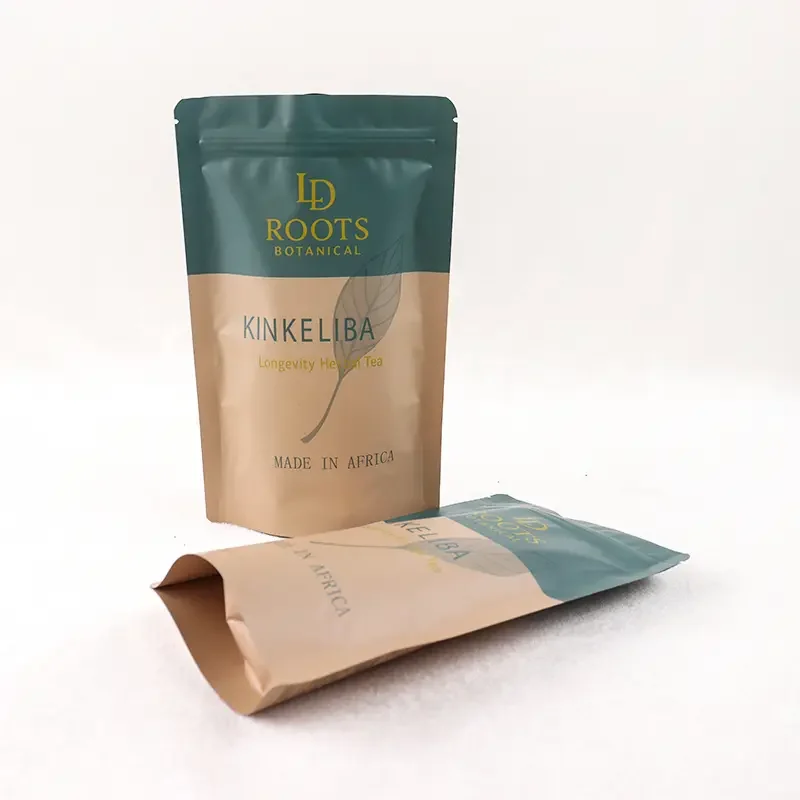
A stand up zipper pouch is a flexible laminated bag. A folded bottom gusset lets it stand on a shelf, and a press-to-close zipper lets customers reseal it after every use. Brands usually replace jars to cut shipping weight and get more room for printing, but a pouch gives up some crush protection in return.
A laminate is a film made by bonding two or more layers together, and each layer does one job. One carries the print, another blocks oxygen or light, and the inner one forms the heat seal. This layered build lets a bag about as thin as a business card keep coffee fresh for months.

Anatomy of the Pouch: Gusset, Zipper, Tear Notch, Hang Hole
If you use the right name for each part, quotes come back accurate on the first try.
- Bottom gusset: the folded panel that opens into a base when the pouch is filled. Its depth is listed as the third dimension, as in 130 × 210 + 80 mm.
- Zipper: the interlocking plastic track, usually set 25–40 mm below the top edge.
- Tear notch: a small cut above the zipper so customers can open the pouch the first time without scissors. Because the top seal has to be torn, it also gives basic tamper evidence.
- Hang hole: a round or euro-style (sombrero-shaped) slot for peg displays.
- Side and top seals: heat-sealed edges, typically 8–10 mm wide. Keep important artwork off these areas.
Pros & Cons Compared With Rigid Jars and Tins
Pouches come out ahead on shipping and print space. Jars and tins still protect better and are easier to recycle.
| Advantages of Pouches | Limitations of Pouches |
|---|---|
| Much lighter to ship. Empty pouches arrive flat on pallets, not as boxed empty jars. | Little crush protection. Fragile snacks need a sturdy shipping carton or extra air in the bag. |
| Front, back and gusset can all be printed, which gives more space than a wrap label. | Most multi-layer laminates aren’t accepted in curbside recycling. Glass, aluminum and steel are. |
| Takes up less shelf space for the same fill, and the pouch shrinks as the product is used. | Underfilled pouches can slump and look messy on the shelf. |
| The zipper reseals the bag without a separate lid. | Zippers wear out with heavy daily use. A tin lid lasts for years. |
| Matte, soft-touch and window finishes add shelf appeal for a small extra cost. | For gift sets, many shoppers still see glass or tin as more upscale. |
Which Material Structure Fits Your Product?
The right pouch material gives as much barrier protection as the product needs against oxygen, moisture, light and grease. A dry, stable product like bath salts does fine in a basic PET/PE laminate. Whole-bean coffee or jerky usually needs a foil or metallized layer to keep its flavor through the full shelf life.

Material structures are listed from the outside layer to the inside layer. PET (polyester) is the outer film that carries the print. PE (polyethylene) is the inner layer that forms the seal. VMPET is polyester with a thin vacuum-deposited aluminum coating. It blocks most light and weighs far less than solid aluminum foil (AL). MOPP is a matte polypropylene film used as an outer layer.
| Structure | Oxygen & Moisture Barrier | Light Blocking | Look | End-of-Life |
|---|---|---|---|---|
| PET/PE | Low–medium | None (clear) | Glossy, see-through | Landfill in most areas |
| Kraft/PET/PE | Low–medium | Partial | Natural paper texture | Landfill (paper and plastic can’t be separated) |
| MOPP/VMPET/PE | High | High | Matte or metallic | Landfill |
| PET/AL/PE | Very high | Complete | Opaque, metallic | Landfill |
| Mono-PE (recyclable) | Medium; high with EVOH | Depends on inks | Softer, less gloss | Made for PE film recycling where it’s collected |
| PLA-based compostable | Low–medium | Partial | Paper-like or clear | Industrial composting |
Foil still gives the strongest barrier. Every other structure gives up some protection to gain on looks, cost or recyclability.
Barrier Needs by Product Category
- Whole-bean coffee: PET/AL/PE or MOPP/VMPET/PE, plus a one-way degassing valve. Oxygen and light are what make beans go stale.
- Jerky and pet treats: PET/AL/PE, or PET/PE with an EVOH layer, often with oxygen absorbers in the bag. EVOH (ethylene vinyl alcohol) is a barrier resin built into films to block oxygen. The inner layer also has to stand up to fats and oils.
- Protein powder: MOPP/VMPET/PE. Moisture is the main problem because it causes clumping.
- Bath salts: PET/PE or Kraft/PET/PE. Salts absorb moisture, but oxygen doesn’t affect them.
- Dried herbs and tea: a metallized or foil layer, because light fades both color and aroma.
Film Thickness and Puncture Resistance
Typical converter spec sheets list stand up pouches at a total thickness of 80–150 µm (microns). Most 250–500 g dry products run well at 100–120 µm.
Sharp or heavy contents need a thicker bag. For nuts, kibble, freeze-dried pieces or any fill over 1 kg, go up to 130–150 µm or add a nylon layer, as in PET/PA/PE. Nylon (PA) is a tough film that resists punctures and cracks from flexing during shipping. Ask for drop-test results on filled pouches, not just on the empty film.
Recyclable and Compostable Pouches: The Honest Trade-Offs
Mono-PE pouches use only one type of plastic so they can go into PE film recycling. The trade-offs are a narrower sealing temperature range, less gloss and a weaker barrier unless EVOH is added. Compostable films made from PLA (polylactic acid, a resin made from plants) usually have a shorter shelf life and can soften if stored somewhere hot and humid.
Collection is the other problem. Most US curbside programs don’t accept flexible film, and compostable bags usually need an industrial facility, with the bags certified to EN 13432 or ASTM D6400. The EU’s Packaging and Packaging Waste Regulation (PPWR) took effect in February 2025 and requires packaging to be recyclable by 2030. If you sell in Europe, it’s worth testing mono-material structures now.

Zipper Types, Add-Ons and Choosing the Right Size
The right closure depends on how customers open and reseal the bag every day. A standard press-to-close zipper works for most coffee and snacks. Sliders make large bags easier to use, and many cannabis products are legally required to have child-resistant zippers. Size the pouch around the measured fill volume, not the fill weight alone.
Zipper and Feature Options
| Closure | Works Well For | Watch-Outs |
|---|---|---|
| Press-to-close | Coffee, snacks, pet treats | Fine powder can clog the track, so tell the converter what you’re filling. |
| Pocket zipper | Products that need tamper evidence | The zipper sits under a tear-off strip, which adds a step for customers. |
| Slider | Bags of 1 kg or more, older shoppers | Costs more per unit and slows filling. |
| Child-resistant | Cannabis, iron supplements, household chemicals | Needs certified test results under 16 CFR 1700 or ASTM D3475. |
| Velcro-style (hook-and-loop) | Bulky pet food, bags opened many times a day | Doesn’t seal as airtight as an interlocking track. |
Press-to-close zippers fit most products. Choose the other types only when a specific use or regulation calls for them.
- Degassing valve: a one-way valve that lets CO₂ out of freshly roasted coffee without letting oxygen in.
- Clear window: shows the product, but it lets light in. Skip it for light-sensitive goods.
- Euro hang hole: needed for peg-hook retail displays. Add 20–30 mm to the height so the hole doesn’t cut into the artwork.
- Spout: for liquids, purees and pourable powders. It needs a different pouch-making setup.
Bottom Styles and Common Size Benchmarks
There are three main bottom styles. A Doyen bottom has a rounded, U-shaped seal and works for lighter fills up to about 500 g. A K-seal bottom has angled corner seals that hold heavier, denser products without splitting. A plow (folded) bottom has no bottom seal. The film folds flat, which gives the squarest base for fills of 1 kg and up.
| Size (W × H + Gusset, mm) | Approx. Fill, Medium-Density Product* |
|---|---|
| 100 × 150 + 60 | 50–100 g |
| 130 × 210 + 80 | 200–250 g |
| 160 × 230 + 90 | 340–450 g |
| 190 × 280 + 100 | 700 g–1 kg |
| 230 × 350 + 110 | 1.5–2 kg |
*These ranges assume a product like whole-bean coffee or granola. The actual fill depends on density: puffed snacks need much more room per gram, while sugar or salts need less. Use the table as a starting point and confirm with a sample fill before you approve the size.
Once your spec is written, test it on real samples before you commit to a full run. YLTPACK was founded in 2005 and makes every order to the customer’s specs. It offers free samples, holds ISO 22000 certification and uses FDA-compliant food-contact materials. To request a material sample kit or a quote for your custom run, email Feynman@yltpacking.com.