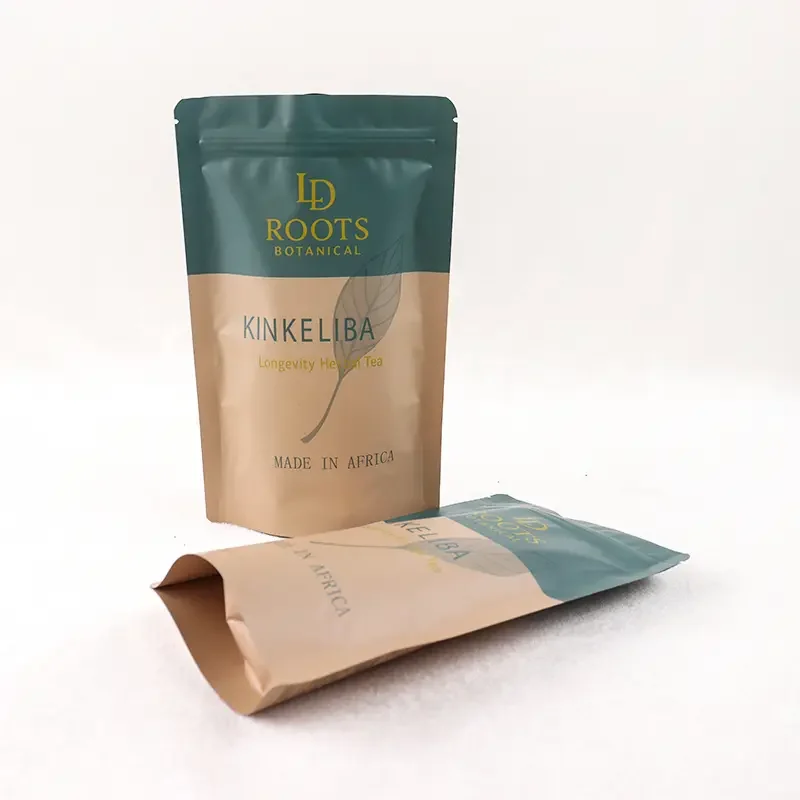
In most supplement pouch vs bottle decisions, a foil (PET/AL/PE) stand-up pouch of about 110–130 μm typically matches an induction-sealed HDPE bottle on moisture barrier. It weighs about 70% less and ships flat. A kraft/PE pouch with no barrier layer is, in most cases, too permeable for gummies, so confirm any structure with your stability testing. Put WVTR (ASTM F1249) and OTR (ASTM D3985) maximums for the finished laminate on the PO, and consider launching in a bottle and selling reorders as refill pouches.
An experienced packaging buyer checks one thing first on a supplement: how the product reacts to humidity. Gummies, probiotics and effervescent powders fail on moisture long before they fail on looks. A pouch that saves a few cents but lets capsules clump costs more than the bottle it replaced.
A supplement pouch vs bottle decision therefore starts with barrier, then moves to freight, MOQ and shelf appeal. A foil stand-up pouch matches an induction-sealed HDPE bottle on moisture and ships far lighter, but the bottle still wins for twice-daily use and for co-packers running a count-and-cap line.
A stand-up pouch is a flexible laminated bag with a folded bottom gusset that lets it stand on a shelf. An induction seal is a foil liner in the cap that is heat-bonded to the bottle rim by an electromagnetic field, giving a tamper-evident closure until first opening.
Which format fits your channel and filling line?
A pouch fits brands that sell direct, on subscription or by parcel, and products such as gummies and probiotics that need a foil barrier. A bottle fits products opened twice a day, pharmacy-led ranges and co-packers that already run a tablet counter and capper. Most brands settle the filling line first, then the channel.
On shelf, a pouch turns a flat front panel square to the shopper, while a round bottle shows only the front third of its wrap label. A matte or soft-touch metallised stand-up pouch reads natural and calm; gloss makes colours pop. A clear window only works on non-foil structures such as PET/PE, at some cost to barrier at that spot.

| Factor | Stand-up pouch (PET/AL/PE, zipper) | HDPE bottle (150cc, induction seal, cap) |
|---|---|---|
| Empty pack weight | About 6–8 g | Typically 20–28 g with cap |
| Freight of empty packs | Ships flat | Ships mostly air |
| Moisture / oxygen barrier | Very high on both | Good on moisture, weak on oxygen |
| Print area | Front, back and gusset | Label panel only |
| Reclose after opening | Zipper | Screw cap |
| Typical channels | DTC, refills, subscription | Pharmacy, retail, heavy daily use |
The pouch wins on weight and print, and the bottle wins on daily handling and filling-line fit.
HDPE lets oxygen through the wall, which is why probiotics in bottles usually rely on desiccant caps or canisters. Bottles run on tablet counters, cappers and induction sealers, while pouches go on premade-pouch fillers or are filled by hand, so switching formats usually means a different co-packer line. Ask about that before comparing unit prices.
What barrier spec should go on the PO for 60 capsules?
For 60 capsules currently in an induction-sealed HDPE bottle, specify a PET 12 μm / AL 7–9 μm / PE 80–100 μm stand-up pouch, about 110–130 μm total. Typical WVTR for that foil laminate is below 0.1 g/m²/day at 38 °C/90% RH per ASTM F1249, but prove equivalence to your bottle with a per-pack test, not film data.
Structure for 60 capsules
Here is a PO line you can paste and adjust. The size is a starting point to be confirmed with a fill test.
- Structure: PET 12 μm / AL foil 7–9 μm / PE 80–100 μm, matte varnish or gloss outer.
- Format: stand-up pouch, about 110 × 160 mm + 50 mm bottom gusset.
- Closure: press-to-close zipper, tear notch on both sides, no degassing valve.
- Seals: minimum seal strength per ASTM F88, typically about 30 N/25 mm (roughly 7 lbf/in) or higher for an 80–100 μm PE sealant, and zero leaks on the air-tightness test.
- Compliance: food-contact declaration for each destination market.
Aluminium foil (AL) is a near-total barrier to moisture, oxygen and light, so the film is rarely the weak point. The real risks are pinholes from creasing and moisture entering through side seals and the zipper channel. A pouch also has roughly twice the surface area of a 150cc bottle, so per-square-metre film data can’t prove the pouch matches your bottle.
USP <671> is the United States Pharmacopeia chapter on container performance testing that measures moisture vapour transmission per container, per day. Ask for it on the finished, zipper-closed pouch, run next to your current bottle with its cap and induction seal. If the bottle carries a desiccant canister, the pouch needs a desiccant sachet of equivalent capacity in your stability study.

Metallised PET (VMPET) is PET film with a thin vacuum-deposited aluminium coating, cheaper than foil and good for mid-barrier work. PET/VMPET/PE suits capsules, coated tablets and many powders. Don’t over-spec: a coated multivitamin tablet that sells through in six months rarely needs foil.
| Structure | Typical total | Typical WVTR (38 °C/90% RH) | Typical OTR (23 °C/0% RH) | Fits |
|---|---|---|---|---|
| Kraft/PE | 90–110 μm | 3–8 g/m²/day | High | Dry tablets, fast sell-through |
| MOPP/Kraft/VMPET/PE | 110–130 μm | 0.5–1.5 | 1–3 cc/m²/day | Kraft look, capsules |
| PET/VMPET/PE | 90–110 μm | 0.5–1.5 | 0.5–2 | Capsules, tablets, powders |
| PET/AL/PE | 110–130 μm | Below 0.1 | Below 0.1 | Gummies, probiotics, effervescents |
| Mono-PE with EVOH | 100–130 μm | 1–3 | 1–5, rises with humidity | Recyclable, moderate sensitivity |
In most cases foil is the structure that covers gummies and probiotics; mono-PE is a compromise, and your own stability test confirms either choice. EVOH loses oxygen barrier as it absorbs moisture, so for any EVOH structure also request OTR at 23 °C and 50–75% RH.
WVTR and OTR in writing
WVTR (water vapour transmission rate) is the amount of moisture that passes through one square metre of film in a day. OTR (oxygen transmission rate) is the same measure for oxygen, in cc/m²/day. Ask for both on the finished laminate, with temperature, humidity and standard (ASTM F1249, ASTM D3985) stated.
For a foil pouch holding gummies or probiotics, a realistic written maximum is WVTR 0.1 g/m²/day at 38 °C/90% RH and OTR 0.1 cc/m²/day at 23 °C/0% RH. For metallised films, add OTR after a Gelbo flex test per ASTM F392. Write a maximum, because a “typical” figure can’t be rejected.
How many more units fit in a 40ft container?
On freight, the supplement pouch vs bottle gap is widest for empty packs: a 40ft high cube holds roughly 200,000 empty 150cc bottles but 2–3 million flat pouches. Filled 60-count units pack to a similar volume, so both formats load at roughly 135,000–170,000 units and ocean freight per unit is close to parity.
A 40ft high cube has about 76 m³ inside, or about 60 m³ usable after cartons and loading gaps. The figures below assume an illustrative all-in container cost of US$5,000; swap in your own quote.
| Load (40ft HC) | Units per container | Approx. load weight | Ocean freight per unit |
|---|---|---|---|
| Empty 150cc bottles | About 200,000 | About 5 t | About US$0.025 |
| Empty flat zipper pouches | 2–3 million (weight-limited) | About 15–22 t | About US$0.002 |
| Filled 60-count bottles | 150,000–170,000 | About 8–9.5 t | About US$0.03 |
| Filled 60-count pouches | 135,000–170,000 | About 5–6.3 t | About US$0.03 |
The large pouch saving applies when empty packs ship to a filler near your market; filled goods ship at near parity, and the pouch gains after the port instead.

Landed cost per unit is the ex-works pack price plus ocean freight, duty, insurance, clearance and local delivery, divided by units shipped. If you import empty packs and fill near your market, the pouch saves about US$0.02 per unit on ocean freight. Duty is a percentage of declared value (FOB-based in the US, CIF-based in the EU), so on filled goods the supplement carries almost all of it and the pack choice barely moves the duty line.
The parcel leg is where a filled pouch pulls ahead. At about 37 g against 55 g for the filled bottle, and lying flat in a letter-size or padded mailer, it often drops a DTC order into a lower weight or size band, and one band usually saves more per order than the whole ocean freight per unit. If a fill test shows spare headspace, trimming the pouch to about 100 × 150 mm cuts packed volume by roughly 15%.
Where pouches fall short and bottles win
A supplement pouch is cheaper to ship and print but harder to live with daily. A press-to-close zipper opened twice a day can lose its grip within a month, capsules don’t shake out as neatly as from a bottle neck, soft gels such as fish oil get no crush protection from film, and most count-fill lines can’t run pouches.
The bottle is also the right call when your compliance team requires a child-resistant closure, when pharmacy buyers prefer a bottle on shelf, or when you already run a bottle line. Child-resistant zippers can be made for pouches, but whether the finished pack passes child-resistance testing is for your compliance team and its test lab to confirm.
Bottle plus refill pouch
A bottle-plus-refill model pairs a branded bottle on the first order with lighter refill pouches for every reorder. The customer keeps the bottle for daily use, and the brand ships about 7 g of film instead of a 25 g bottle each month. Size the refill so it empties into the bottle in one pour.
A subscription brand might ship the bottle once, then send each refill in a letter-size mailer; a gummy brand might keep the bottle in pharmacies and sell foil refills online. Match the refill to the bottle’s count, not its volume. Our piece on whether refill pouches or bottles are greener covers the environmental trade-offs.

| Fill | Typically replaces | Suggested starting size | Format |
|---|---|---|---|
| 30 size-0 capsules, about 15 g (0.5 oz) | 75cc bottle | 90 × 130 + 40 mm (3.5 × 5.1 + 1.6 in) | Stand-up, zipper |
| 60 size-0 capsules, about 30 g (1.1 oz) | 150cc bottle | 110 × 160 + 50 mm (4.3 × 6.3 + 2 in) | Stand-up, zipper |
| 120 size-0 capsules, about 60 g (2.1 oz) | 250cc bottle | 130 × 190 + 60 mm (5.1 × 7.5 + 2.4 in) | Stand-up, zipper |
| 60 gummies, about 200 g (7 oz), bulk density about 0.6 g/ml | 300–400cc bottle | 160 × 230 + 80 mm (6.3 × 9.1 + 3.1 in) | Stand-up, zipper |
| 250 g (8.8 oz) powder | Wide-mouth jar | 130 × 200 + 70 mm (5.1 × 7.9 + 2.8 in) | Stand-up, zipper |
Every pouch is made to your product, with the exact size confirmed against capsule size, fill weight and filling method, usually by a fill test on samples.
Why did our kraft pouches let gummies go sticky?
Gummies usually go sticky in kraft pouches within a few months for one of three reasons. The laminate had no foil or metallised layer, the metallised layer cracked from folding, or moisture entered at the zipper and side seals. The film spec is only part of the barrier.
The most common cause is kraft/PE or kraft/PLA chosen for the look with no barrier layer. Paper adds stiffness, not protection, and kraft/PE typically lets through 3–8 g/m²/day at 38 °C/90% RH, far too much for a sugar or pectin gummy. VMPET cracks where the gusset folds during filling and shipping, and moisture creeps through tiny channels where the zipper crosses the side seal, so ask for a seal-width check at that corner and leak testing on samples.

Next time, keep the kraft look but put foil behind the paper, with the foil-level WVTR and OTR maximums written into the PO. If you accept MOPP/Kraft/VMPET/PE for cost, set a WVTR maximum of about 1.5 g/m²/day and add OTR after flex per ASTM F392. Drop the degassing valve too: it’s a one-way vent for coffee CO₂, and on a supplement pouch just another hole and cost.
Fill a few sample pouches with your real gummies, close the zipper, and leave them in a humid bathroom for two weeks next to a sealed bottle. That test won’t replace a stability study, but it shows a weak seal or laminate faster than any datasheet.
MOQ and price breaks: pouch vs custom bottle
A 4-colour printed supplement pouch with a zipper typically starts at a few hundred to about 2,000 pieces per design with digital printing, and around 5,000–20,000 pieces with rotogravure. Gravure unit price typically falls 20–30% between 10k and 25k. A stock bottle’s price curve is flatter, and a custom-mould bottle rarely makes sense below about 50k.
Rotogravure needs one engraved cylinder per colour, and a 4-colour job on foil or metallised film usually adds white, so expect five cylinders. Digital printing needs no cylinders and suits several SKUs or a test run, but at 10,000 pieces of one design it usually costs more per unit than gravure.
| Quantity per design | Pouch (PET/AL/PE, zipper), vs 10k gravure | Stock bottle + cap, liner, label, vs its 10k price | Custom-mould bottle |
|---|---|---|---|
| 1,000 pcs | Digital, well above | Possible; label setup dominates | Not practical |
| 10,000 pcs | Gravure 100%; digital typically above | 100% | Mould cost dominates per unit |
| 25,000 pcs | Gravure about 70–80% | About 90–95% | Mould still a large share |
| 50,000 pcs | Gravure about 60–70% | About 85–90% | Often the first practical run |
These are indicative ranges for a 110 × 160 + 50 mm pouch, one design, five cylinders amortised into the gravure price, EXW. A bottle’s resin and moulding cost is mostly per piece, while a custom mould is separate tooling, commonly in the thousands to tens of thousands of US dollars. A one-way degassing valve would typically add around US$0.02–0.05 per pouch that a capsule or gummy pouch doesn’t need.
Ask the bottle maker to price bottle, cap, induction liner and label together at 10k, 25k and 50k on the same Incoterm, then compare that total with the pouch, which already includes print and closure.
Can the quote be split line by line?
Yes, a pouch quote can be split into laminate per piece, cylinders as a one-off charge, zipper, printing, packing, and freight with the Incoterm stated (EXW, FOB or DDP). That split is the only way to compare two suppliers line by line, because one may bundle cylinders into the unit price and the other may not.
“Plates” in gravure are engraved cylinders, reused on repeats, so the cylinder charge should include white and shouldn’t reappear on the next order. Check that layers and microns match the PO, the zipper type and position are stated, and Pantone references match your artwork.
Lead time for first orders, repeats and Q4
Supplement pouch lead time depends on print method and whether cylinders already exist. Across the industry, a first gravure order typically takes longer than a repeat, commonly three to five weeks, because cylinders must be engraved and a proof approved. Repeats and digital orders run shorter. In Q4 and before Chinese New Year, place POs about 10–12 weeks before stock must land.
Chinese New Year falls in early February 2027, and most plants and logistics providers slow down for two to three weeks around it. With sea transit typically adding 3–6 weeks, a PO that must ship before the holiday is safest placed by early December, with the ship date confirmed in writing.
Which compliance documents come with each lot?
Supplement pouch compliance documents come in two kinds. Per structure, you need an FDA food-contact compliance letter for the US and EU 10/2011 migration testing for the EU, renewed when the laminate changes. Per lot, you need a certificate of analysis (COA) against your PO spec, and a converter can supply one with each PO if the PO lists its values.
The FDA letter should name the exact structure and cite the regulation each layer relies on, for example 21 CFR 177.1520 for the PE sealant, 21 CFR 177.1630 for PET film and 21 CFR 175.105 for laminating adhesives. For the EU, ask for migration testing against EU 10/2011, under the Regulation (EC) 1935/2004 framework, on the laminate you’re buying. Your regulatory team confirms suitability for your product.
A certificate of analysis (COA) for packaging is a lot record of measured values against the agreed spec. Air-tightness, tensile, dimensions and print checks come from the converter’s lab for every lot, while WVTR, OTR and migration usually come from a third-party lab per structure.
How we handle this at YLTPACK
YLTPACK makes supplement pouches to each brand’s artwork and size in a 6,520 m² cleanroom workshop with 30+ machines, including rotogravure presses and laminators. Every order passes an 11-point QC inspection covering seals, zipper, air-tightness and odour, backed by air-tightness and tensile testing in our lab.
Our MOQs are 1,000 pcs per design for digital printing and 10,000 pcs for gravure, and lead time is 7–15 days after artwork approval. We use FDA-compliant food-contact materials, with test reports available on request, and BPA-free test reports are also available on request. We hold ISO 9001 and ISO 22000.
For probiotics, we can quote recyclable mono-PE (BOPE/PE, with EVOH where barrier is needed) from 30,000 pcs. Free samples come from our stock, with freight on your side, so ask for a mono-PE sample next to a foil one and run both through your stability test.
Frequently asked questions
Will a mono-PE pouch meet EU PPWR and US state EPR rules?
Not automatically. The PPWR has applied since August 2026 and requires packaging to be recyclable from 2030, but its detailed design-for-recycling criteria are still being finalised. State EPR programmes such as California’s and Oregon’s set fees by material and recyclability, so confirm your obligations with your compliance advisor.
Can a recyclable pouch protect probiotics?
Sometimes, and a mono-PE option can be quoted and sampled next to foil to find out. A recyclable mono-material pouch is one built from a single polymer family so it can go into one recycling stream. Mono-PE with an EVOH layer, nitrogen flushing and a desiccant can work for less sensitive strains, while mono-PP with a barrier coating is another route on the market. Your stability test decides, and many brands still use foil for the most oxygen-sensitive strains.
How long will supplements last in a foil pouch?
Your stability study sets that figure, not the packaging supplier. The pouch supplier provides barrier data and test reports to support the study.
Which to order first
For most capsule and gummy brands, the practical supplement pouch vs bottle answer is a foil refill pouch alongside the bottle you already sell. The bottle keeps pharmacy shelves and daily users happy, while the pouch carries the freight and margin gains on every reorder. Move to an all-pouch range only after your stability test and one season of customer feedback.
Send your product details, including capsule or gummy count, fill weight and target quantity, and we’ll suggest a pouch size and laminate with a quote within one business day. If you’d rather share your current bottle spec or artwork, email your bottle spec to Feynman@yltpacking.com and we’ll send free samples of a similar size and structure from our stock, with freight on your side.